
Pasiphila
Meyrick, 1883
Species Guides
1- Pasiphila rectangulata(Green Pug)
Pasiphila is a of geometrid moths described by Edward Meyrick in 1883. The genus comprises approximately 36 , with 27 species native to New Zealand, indicating a strong biogeographic center in the Australasian region. Formerly treated as a synonym of Chloroclystis, Pasiphila has been reinstated as a valid genus, with Gymnodisca now mostly treated as a subgenus. Several species formerly placed in Pasiphila have been transferred to the related genus Pasiphilodes.
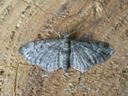
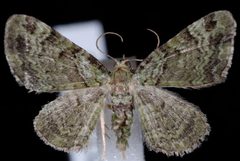
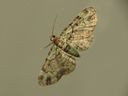
Pronunciation
How to pronounce Pasiphila: //pəˈsɪfɪlə//
These audio files are automatically generated. While they are not always 100% accurate, they are a good starting point.
Images
Distribution
Strongly centered in New Zealand, where 27 of approximately 36 known are . Additional species occur in the Palaearctic Region, including Europe and Asia. Distribution records from GBIF indicate presence in Denmark, Norway, and Sweden. At least one species, Pasiphila rectangulata, has been accidentally introduced to North America.
Similar Taxa
- ChloroclystisFormerly treated as a synonym of Pasiphila; historical confusion in requires careful examination of wing pattern and genitalia for separation
- PasiphilodesSeveral formerly placed in Pasiphila are now assigned to this ; distinction requires detailed morphological analysis
- GymnodiscaNow mostly treated as a subgenus of Pasiphila rather than a separate ; -level classification remains under revision
More Details
Taxonomic history
The has undergone substantial taxonomic revision. Pasiphila was formerly synonymized under Chloroclystis, but has been reinstated as valid. The related name Gymnodisca is now mostly treated as a subgenus of Pasiphila. Rhinoprora is sometimes treated as a synonym of subgenus Gymnodisca. A number of formerly included in Pasiphila are now placed in Pasiphilodes.
Biogeographic significance
With 75% of known to New Zealand, Pasiphila represents a notable example of insular radiation within Geometridae. The concentration of diversity in New Zealand contrasts with the more widespread distribution of related .
Sources and further reading
- BugGuide
- Wikipedia
- GBIF taxonomy match
- iNaturalist taxon
- NCBI Taxonomy
- Catalogue of Life
- Hosts, Pattern of Seasonal Emergence and Flight, and New Distributional Records of Palearctic <I>Pasiphila rectangulata</I> (Lepidoptera: Geometridae) in the Northeastern United States
- The genome sequence of the Green Pug moth, Pasiphila rectangulata (Linnaeus, 1758).