
Horisme intestinata
(Guenée, [1858])
Brown Bark Carpet Moth
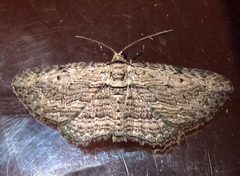
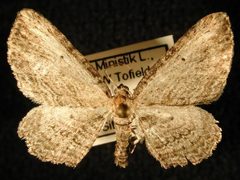
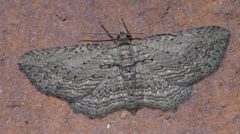
Horisme intestinata is a geometrid commonly known as the brown bark carpet moth. It occurs widely across temperate North America. are active in late spring through summer and again in early autumn. The inhabits wooded environments.
Pronunciation
How to pronounce Horisme intestinata: /hɔˈrɪs.me ˌɪn.tɛs.tɪˈnaː.ta/
These audio files are automatically generated. While they are not always 100% accurate, they are a good starting point.
Identification
Distinguished from similar carpet moths by its specific wing pattern and coloration; precise identification may require examination of genitalia or reference to regional keys. The pattern (late May–July and September–October) can aid in timing-based identification.
Images
Appearance
Wingspan 21–32 mm. Overall coloration and pattern consistent with bark-dwelling geometrid moths, providing camouflage against tree bark surfaces.
Habitat
Wooded areas, including forests and tree-dominated landscapes where bark surfaces provide camouflage and larval plants occur.
Distribution
Widespread throughout most of temperate North America; recorded from Canadian provinces (Alberta, Manitoba, Saskatchewan) and the United States (including Vermont).
Seasonality
active from late May to late July, with a second from early September to early October. pattern with two distinct periods.
Diet
Larvae feed on Clematis , including garden Clematis (Clematis spp.). feeding habits not documented.
Host Associations
- Clematis - larval plantGarden Clematis specifically recorded
Life Cycle
Complete with , larva, pupa, and stages. : two per year with adult in late spring–summer and early autumn.
Behavior
are and attracted to light. Larvae feed on plant foliage.
Ecological Role
Larval herbivore on Clematis; contributes to as prey for birds, bats, and other . may serve as .
Human Relevance
Minor garden pest when larvae feed on ornamental Clematis; otherwise little direct human impact. Subject of citizen science observation and monitoring.
Similar Taxa
- Other Horisme speciesSimilar bark-carpet moth ; require careful examination of wing patterns or genitalia for separation
- Other Larentiinae geometridsShared bark-camouflage appearance and similar size range; identification relies on specific pattern details and timing
More Details
Taxonomic note
Authority sometimes cited as Guenée, 1857 or Guenée, [1858]; accepted in Catalogue of Life as (Guenée, [1858])