
Eupithecia swettii
Grossbeck, 1907
Swett's Pug
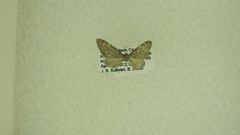
Eupithecia swettii is a small geometrid commonly known as Swett's Pug. It belongs to the diverse 'pug' group within the Eupithecia, characterized by narrow wings and a distinctive resting posture. The occurs in eastern North America and has been documented visiting apple flowers, contributing to pollination services.
Pronunciation
How to pronounce Eupithecia swettii: /juːˈpɪθ.i.ə ˈswɛt.i.aɪ/
These audio files are automatically generated. While they are not always 100% accurate, they are a good starting point.
Identification
Members of Eupithecia are recognized by narrow wings held in a characteristic resting posture, often with wings folded tightly against the body. Definitive -level identification of E. swettii typically requires dissection and examination of genitalia, as is common for many Eupithecia species. Geographic distribution may aid identification: eastern North American range distinguishes it from western .
Images
Appearance
Narrow-winged with wings typically held flat or slightly overlapping at rest. As a member of the Eupithecia , possess slender bodies and relatively small size. Wing patterns and coloration specific to this are not detailed in available sources.
Habitat
Dry mixed conifer forest with oaks at moderate elevations (approximately 7,000 feet has been documented). Associated with supporting diverse floral resources.
Distribution
Eastern North America: Quebec and Massachusetts south to North Carolina, west through Missouri and Kansas to Mississippi, and eastern Texas.
Seasonality
activity period not specified in sources; presumably active during warmer months when plants and flowers are available.
Host Associations
- Apple (Malus) - flower visitor observed on apple flowers; larval plant unknown
Life Cycle
Complete with , larva, pupa, and stages. Larval and specific plants for E. swettii are not documented.
Behavior
are and attracted to light sources. Has been observed visiting apple flowers at night, contributing to pollination.
Ecological Role
function as . A study in Arkansas documented Eupithecia visiting apple flowers and contributing to fruit set comparable to daytime pollinators. Specific larval ecological role unknown.
Human Relevance
Potential contributor to apple pollination in agricultural settings. No documented pest status.
Similar Taxa
- Other Eupithecia speciesAll share narrow wings and -characteristic resting posture; many require genitalic dissection for reliable identification
- Other Geometridae (inchworm moths)Similar overall body plan but Eupithecia distinguished by wing shape and resting posture
More Details
Taxonomic note
The Eupithecia is exceptionally diverse with over 1,400 described worldwide. Many species are difficult to distinguish without microscopic examination.
Pollination research
Eupithecia were among the visitors documented in a 2021 study on apple pollination in Arkansas, demonstrating that 'pug' moths participate in nighttime pollination services alongside more commonly recognized .