Eupithecia ravocostaliata
Packard, 1876
tawny eupithecia, great variegated pug
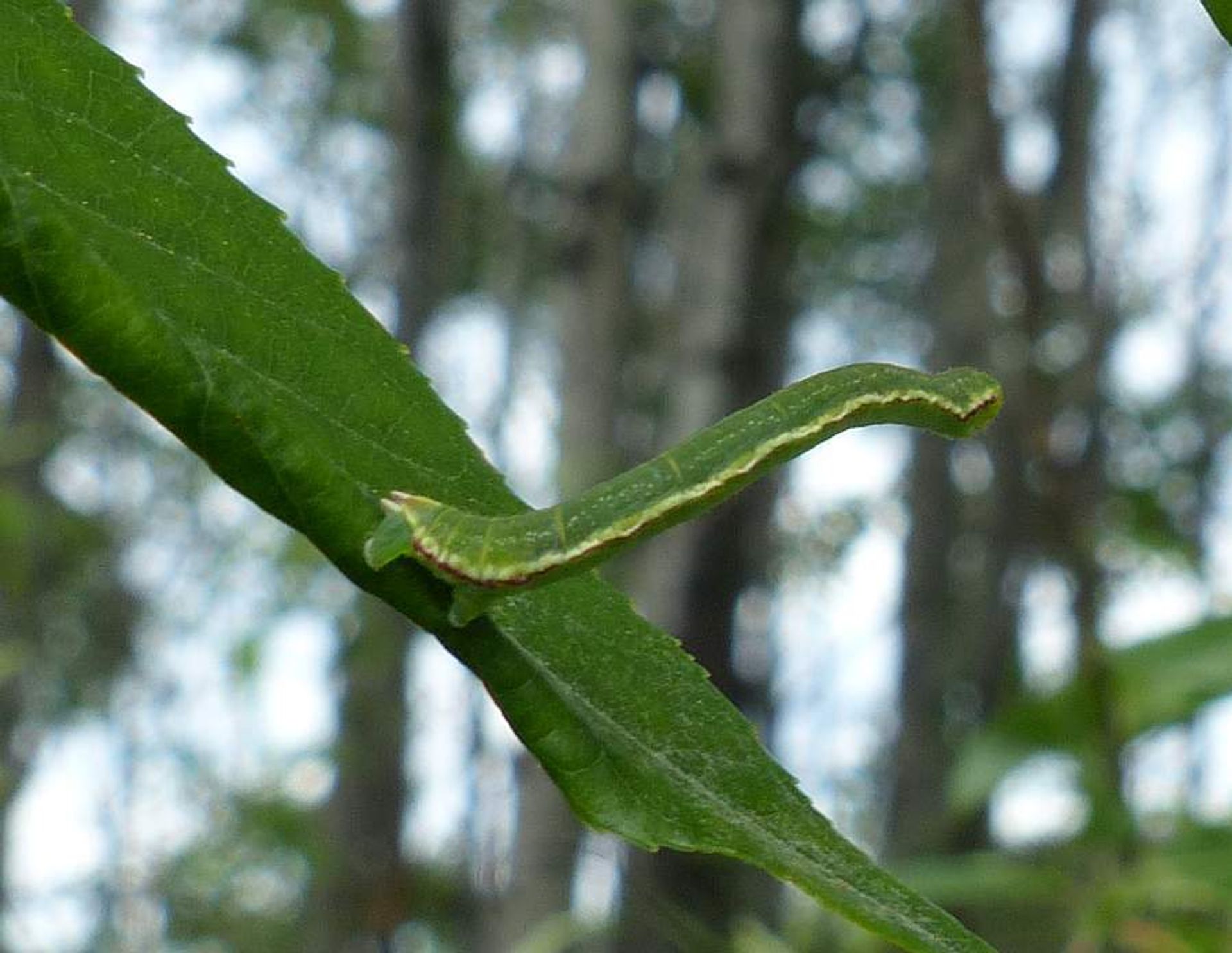
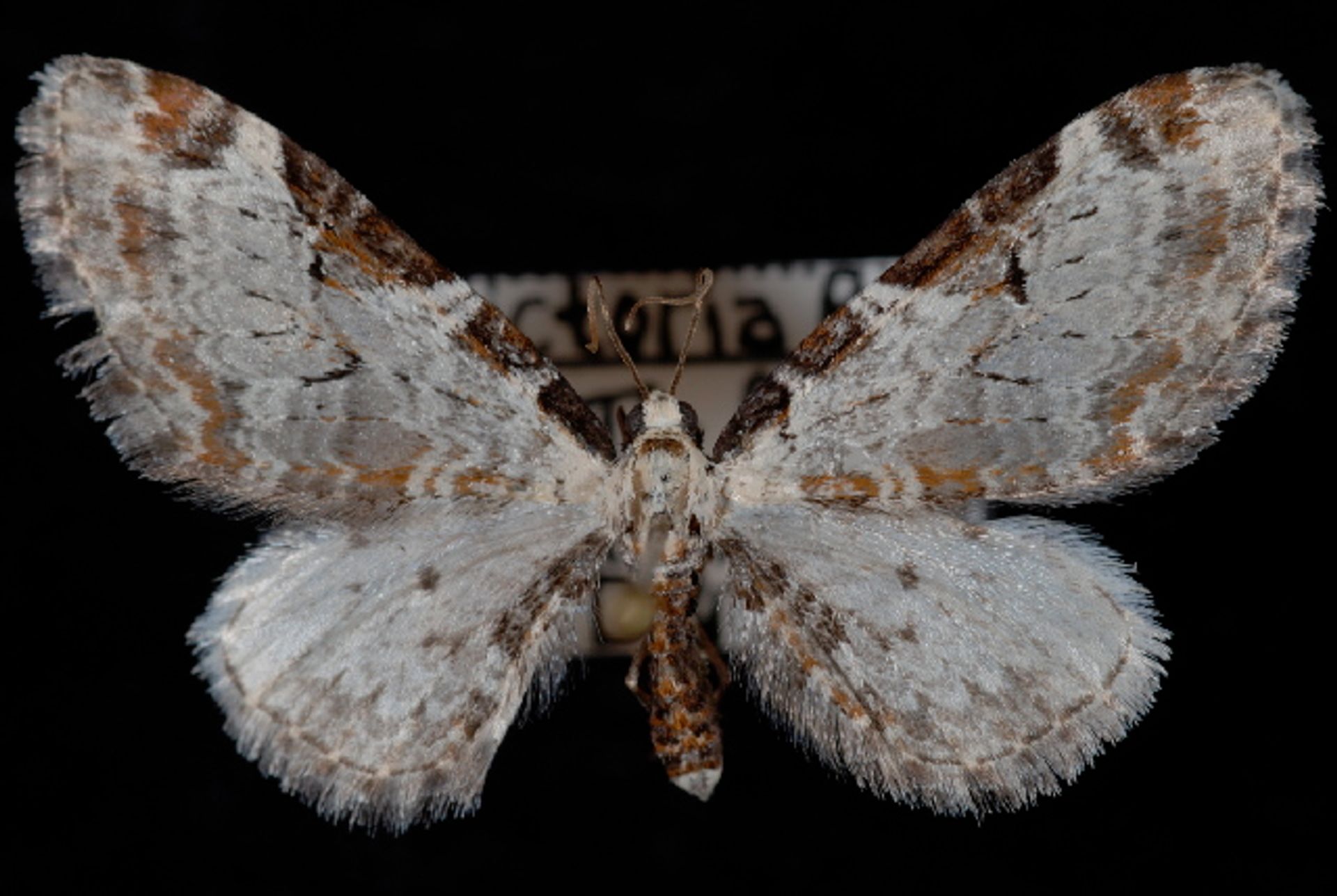
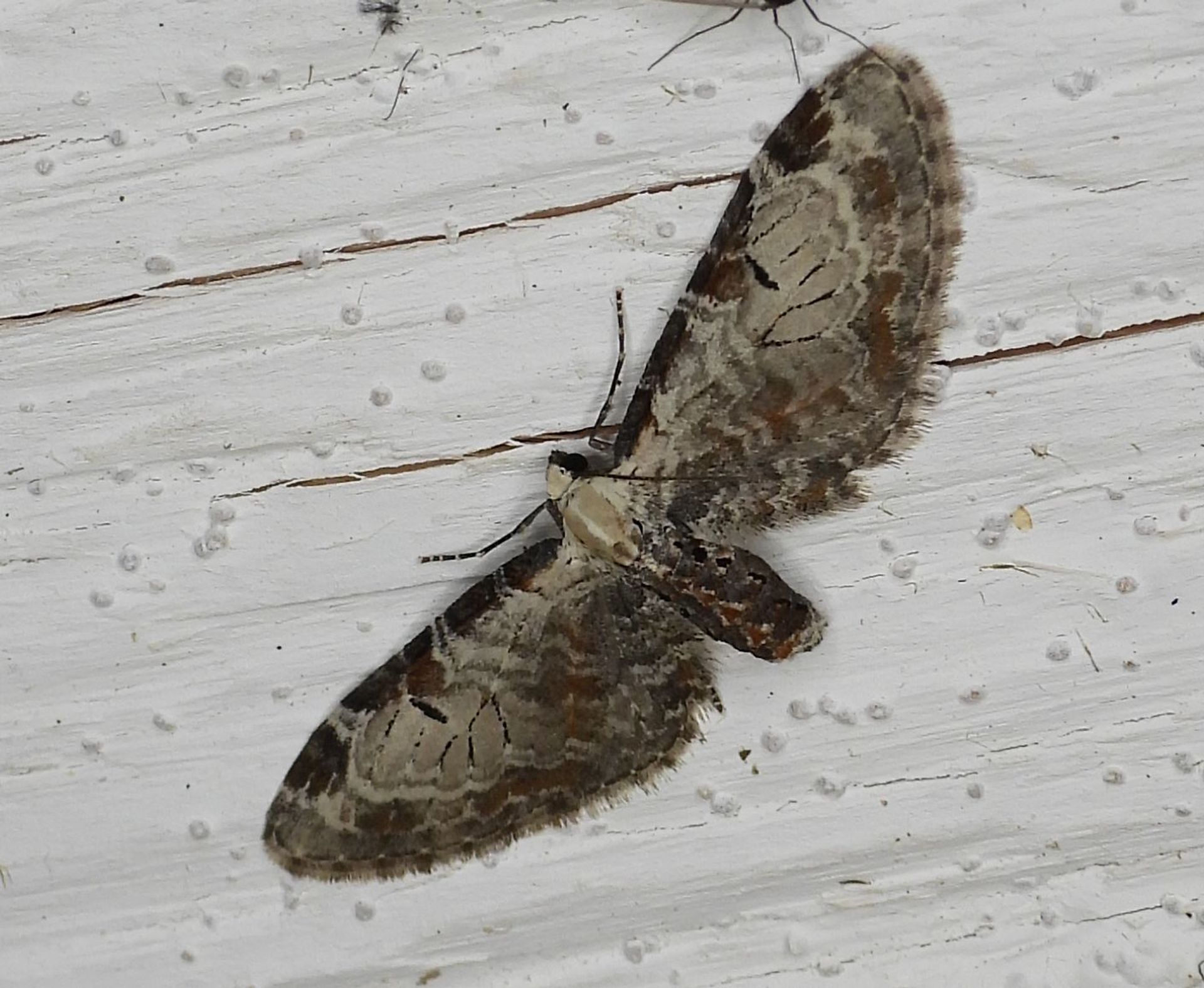
Eupithecia ravocostaliata is a small geometrid commonly known as the tawny eupithecia or great variegated pug. First described by Alpheus Spring Packard in 1876, this occurs across northern North America from the northeastern United States through Canada to the Pacific coast. It is a member of the diverse pug moth Eupithecia, characterized by narrow wings and distinctive resting postures. The species has been documented visiting apple flowers, contributing to pollination services.
Pronunciation
How to pronounce Eupithecia ravocostaliata: /juːˌpɪˈθiːsjə ˌrævoʊˌkɒstəˈliːætə/
These audio files are automatically generated. While they are not always 100% accurate, they are a good starting point.
Identification
Members of the Eupithecia are readily recognized by their narrow wings and unique resting posture. Specific identification of E. ravocostaliata to level within this large and taxonomically challenging genus requires examination of genitalic characters or other fine morphological details not visible to the naked . The species can be distinguished from similar pug moths by geographic range and, where available, plant association with Rhamnus purshiana.
Images
Appearance
have a wingspan of approximately 20 mm. As a member of the Eupithecia, it possesses the characteristic narrow wings typical of pug moths. The exhibits coloration consistent with the "tawny eupithecia," though specific pattern details are not explicitly documented in available sources.
Habitat
Occurs in forested and wooded across its broad North American range. The larval plant Rhamnus purshiana (cascara) indicates association with moist woodland and forest edge environments where this shrub grows. have been attracted to lights in dry mixed conifer forest with oaks at 7,000 feet elevation, suggesting adaptability to varied forest types.
Distribution
Found in northern New York and the New England states, extending across Canada from the Maritime provinces to Vancouver Island, and southward down the west coast to the San Francisco Bay region. Distribution records confirm presence in Alberta, Manitoba, and Saskatchewan in Canada, and Vermont in the United States.
Seasonality
have been recorded on wing from January through August, indicating an extended period spanning late winter through summer. This broad seasonality suggests possible regional variation in or multiple in parts of the range.
Diet
Larvae feed on the foliage of Rhamnus purshiana (cascara), a shrub in the buckthorn . feeding habits are not explicitly documented, though the has been observed visiting apple flowers, suggesting possible nectar feeding.
Host Associations
- Rhamnus purshiana - larval plantcascara; larvae feed on foliage
Life Cycle
Complete with , larval, pupal, and stages. Larvae are foliage-feeders on the plant. Specific details of site, number of per year, and stage are not documented in available sources.
Behavior
are and attracted to artificial light sources. The has been documented visiting apple flowers at night, indicating potential nectar-seeking and contribution to nocturnal pollination. As with other Eupithecia species, adults exhibit the -characteristic resting posture with wings held in a distinctive position.
Ecological Role
Larvae function as herbivores, consuming foliage of the plant Rhamnus purshiana. contribute to pollination, having been documented visiting apple flowers in a study demonstrating significant nighttime pollination services by and other nocturnal insects. The serves as prey for , with at least one braconid wasp ( Bassus) documented using Eupithecia caterpillars as hosts.
Human Relevance
Documented as a of apple flowers, contributing to fruit set in orchard settings. This pollination service highlights the value of traditionally overlooked in agricultural contexts. The has no documented status as an agricultural pest.
Similar Taxa
- Other Eupithecia speciesThe Eupithecia contains numerous morphologically similar that require dissection of genitalia or other specialized characters for definitive identification. Many pug moths cannot be reliably distinguished by external appearance alone.
More Details
Taxonomic challenges
The Eupithecia is exceptionally diverse and taxonomically difficult, with many requiring microscopic examination of genitalic structures for accurate identification. This has led to underreporting and misidentification in many regions.
Pollination research significance
A 2021 study in the Journal of Economic Entomology documented Eupithecia visiting apple flowers at night, contributing to the growing recognition of insects as important in agricultural systems. This research challenges the traditional focus on pollinators and highlights the dual ecological roles of moths—some of which have larval stages considered pests while provide pollination services.