
Eupithecia placidata
Taylor, 1908
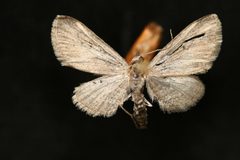
Eupithecia placidata is a small geometrid in the pug group, first described by Taylor in 1908. It occurs in western North America from British Columbia to California. The has a wingspan of approximately 20 mm and is active as an from February through October. Its larvae feed on a diverse range of coniferous and deciduous trees including junipers, cedars, poplars, pines, Douglas-fir, firs, hemlocks, and birches.
Pronunciation
How to pronounce Eupithecia placidata: //juːˈpɪθ.i.ə pləˈsɪdə//
These audio files are automatically generated. While they are not always 100% accurate, they are a good starting point.
Identification
Members of Eupithecia are recognized by their narrow wings and unique resting posture. -level identification within this typically requires examination of genitalia characters, as external is often insufficient for reliable differentiation. Eupithecia placidata can be distinguished from other western North American Eupithecia species through dissection and comparison of male and female genitalia structures.
Images
Appearance
Small with a wingspan of approximately 20 mm. As a member of the Eupithecia, it possesses narrow wings and exhibits the characteristic resting posture of pug moths, with wings held flat or slightly folded.
Habitat
Found in forested environments supporting its larval plants, including mixed coniferous and deciduous woodlands. The occurs in ranging from low elevations to montane zones where suitable host trees are present.
Distribution
Western North America from British Columbia south to California.
Seasonality
have been recorded on wing from February to October, indicating a prolonged period spanning multiple seasons.
Diet
Larvae feed on Juniperus scopulorum (Rocky Mountain juniper), Juniperus communis (common juniper), Thuja plicata (western red cedar), Populus balsamifera trichocarpa (black cottonwood), Pinus strobus (eastern white pine), Pinus contorta var. latifolia (lodgepole pine), Pseudotsuga menziesii var. glauca (Rocky Mountain Douglas-fir), Abies lasiocarpa (subalpine fir), Tsuga heterophylla (western hemlock), and Betula papyrifera (paper birch). feeding habits are not documented.
Host Associations
- Juniperus scopulorum - larval Rocky Mountain juniper
- Juniperus communis - larval common juniper
- Thuja plicata - larval western red cedar
- Populus balsamifera trichocarpa - larval black cottonwood
- Pinus strobus - larval eastern white pine
- Pinus contorta var. latifolia - larval lodgepole pine
- Pseudotsuga menziesii var. glauca - larval Rocky Mountain Douglas-fir
- Abies lasiocarpa - larval subalpine fir
- Tsuga heterophylla - larval western hemlock
- Betula papyrifera - larval paper birch
Life Cycle
Complete with , larval, pupal, and stages. Larvae are on diverse tree . Specific details of site and stage are not documented.
Behavior
are and have been observed visiting flowers, including apple blossoms, where they may contribute to nocturnal pollination. Larvae are foliage feeders on trees.
Ecological Role
Larvae function as primary consumers, feeding on foliage of various coniferous and deciduous trees. have been documented as visitors to apple flowers and may serve as in orchard and natural .
Human Relevance
Documented as a visitor to apple flowers in Arkansas, contributing to pollination services in apple production. The ' broad larval range includes several commercially important timber species, though it is not reported as a significant pest.
Similar Taxa
- Other Eupithecia speciesNarrow wings and pug-like resting posture are shared across the ; -level identification requires genitalia examination
- Other Geometridae in LarentiinaeSimilar size and general ; Eupithecia distinguished by characteristic wing shape and posture
More Details
Taxonomic note
The Eupithecia is one of the largest in Geometridae, with identification often requiring microscopic examination of genitalia. Eupithecia placidata was described by Taylor in 1908 based on western North American material.
Pollination research
A 2021 study in the Journal of Economic Entomology documented Eupithecia , including E. placidata, as visitors to apple flowers, demonstrating their potential contribution to crop pollination alongside more commonly recognized .