
Eupithecia peckorum
Heitzman & Enns, 1977
Peck's Pug, Peck's Pug Moth
Eupithecia peckorum is a small geometrid to the south-central United States, first described in 1977. The belongs to the diverse 'pug moth' Eupithecia, characterized by narrow wings and a distinctive resting posture. It has been documented visiting apple flowers, contributing to pollination services.


Pronunciation
How to pronounce Eupithecia peckorum: /ˌjuːpɪˈθiːʃə ˈpɛkərʌm/
These audio files are automatically generated. While they are not always 100% accurate, they are a good starting point.
Identification
Distinguished from other Eupithecia by geographic restriction to eastern Texas, Missouri, Mississippi, and Louisiana. Identification to species level typically requires examination of genitalia, as is common for this . The narrow wing shape and resting posture separate Eupithecia from other geometrid genera; species-level determination relies on subtle wing pattern differences and dissection.
Images
Appearance
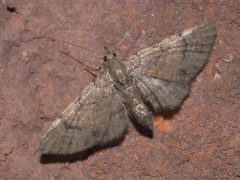
Small with forewing length of 8.3–9.2 mm. As a member of the Eupithecia, it possesses narrow, relatively unmarked wings and a slender body typical of pug moths. The resting posture involves wings held flat or slightly folded, often with a characteristic 'pug-like' stance.
Habitat
Associated with mixed forest . Observed in dry, mixed conifer forest with oaks at 7,000 feet elevation in New Mexico, though this may represent a related or range extension. The core range suggests deciduous and mixed woodland environments in the south-central United States.
Distribution
to the United States. Documented from eastern Texas, Missouri, Mississippi, and Louisiana. GBIF records indicate presence in North America.
Behavior
, attracted to artificial light sources. Has been observed visiting apple flowers at night, indicating nectar-feeding and potential role in pollination.
Ecological Role
Documented as a visitor to apple flowers, contributing to nighttime pollination services in agricultural settings. As a member of a diverse geometrid , larvae likely function as herbivores, though specific plants for this remain unrecorded.
Human Relevance
Named in honor of Dr. and Mrs. William B. Peck, araneologists at Central Missouri State University. Identified as one of several contributing to economically significant pollination of apple crops.
Similar Taxa
- Other Eupithecia speciesShare narrow wing shape and resting posture; require genital dissection or subtle pattern analysis for separation
- Other Geometridae (non-Eupithecia)Differ in wing shape—Eupithecia has characteristically narrow wings compared to broader-winged geometrids
More Details
Etymology
Named to honor Dr. and Mrs. William B. Peck of Central Missouri State University, Warrensburg, Missouri, both araneologists (spider ).
Taxonomic History
Described by Roger L. Heitzman and Wilbur R. Enns in 1977, making it a relatively recently described within the large Eupithecia.