
Eupithecia olivacea
Taylor, 1906
A North American geometrid described by Taylor in 1906. The is notable for its uniform olive-brown forewings and early spring period. Larvae are associated with coniferous trees including firs, spruces, and hemlocks, as well as hawthorn. The species has been documented as a visitor to apple flowers, suggesting potential pollination activity.
Pronunciation
How to pronounce Eupithecia olivacea: /juːpɪˈθiːʃə ˌɒlɪˈveɪsiə/
These audio files are automatically generated. While they are not always 100% accurate, they are a good starting point.
Identification
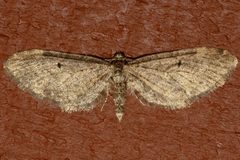
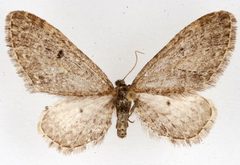
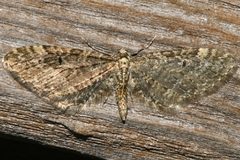
Uniform olive-brown forewings distinguish this from other Eupithecia. fly in early spring (March–April), which separates them from many later-flying .
Images
Appearance
Forewings are uniform olive brown.
Habitat
Associated with coniferous forest supporting larval plants including Abies, Picea, Pseudotsuga, and Tsuga .
Distribution
North America: British Columbia south through Washington and Oregon to California.
Seasonality
on wing from early March to April.
Diet
Larvae feed on Abies grandis, Abies amabilis, Abies lasiocarpa, Crataegus douglasii, Pseudotsuga menziesii var. glauca, Picea sitchensis, and Tsuga heterophylla. feeding habits not documented.
Host Associations
- Abies grandis - larval food plant
- Abies amabilis - larval food plant
- Abies lasiocarpa - larval food plant
- Crataegus douglasii - larval food plant
- Pseudotsuga menziesii var. glauca - larval food plant
- Picea sitchensis - larval food plant
- Tsuga heterophylla - larval food plant
Behavior
have been observed visiting apple flowers at night, indicating activity.
Ecological Role
Larval herbivore on conifers and hawthorn. Potential of apple based on observational records.
Human Relevance
Documented as a visitor to apple orchards; may contribute to pollination services in fruit production.
Similar Taxa
- Other Eupithecia speciesMany share similar size and wing shape; E. olivacea distinguished by uniform olive-brown coloration and early spring period.
Sources and further reading
- BugGuide
- Wikipedia
- GBIF taxonomy match
- iNaturalist taxon
- NCBI Taxonomy
- Catalogue of Life
- Grasshoppers of Colorado
- Grasshoppers of Colorado
- Grasshoppers of Wyoming and the West
- Grasshoppers of Wyoming and the West
- SUBFAMILY CATANTOPINAE (MELANOPLINAE) |Grasshoppers of Wyoming and the West
- P.M. Pollinators: Study Shines Light on Nocturnal Insects' Role in Apple Production