
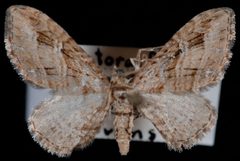
Eupithecia niphadophilata
Dyar, 1904
A small geometrid in the Eupithecia, commonly known as a "pug." First described in 1904, this ranges across western North America from British Columbia to New Mexico. fly in late summer, while larvae feed on coniferous trees including juniper and western redcedar. The species overwinters as an .
Pronunciation
How to pronounce Eupithecia niphadophilata: //juːˈpɪθ.i.si.ə nɪˌfædəˈfaɪlə.tə//
These audio files are automatically generated. While they are not always 100% accurate, they are a good starting point.
Identification
Recognizable as a Eupithecia 'pug' by narrow wings and characteristic resting posture. Specific identification to level requires examination of genitalia or other microscopic characters. active from late July to September. Larvae associated with Juniperus and Thuja plants.
Images
Habitat
Coniferous forest . Associated with plants Juniperus communis, Juniperus scopulorum, and Thuja plicata.
Distribution
North America from British Columbia and western Alberta south to New Mexico.
Seasonality
on wing from late July to September. Larvae present from mid-May to early August. occurs July to August. overwinters as .
Diet
Larvae feed on Juniperus communis (common juniper), Juniperus scopulorum (Rocky Mountain juniper), and Thuja plicata (western redcedar). feeding habits not documented.
Host Associations
- Juniperus communis - larval food plant
- Juniperus scopulorum - larval food plant
- Thuja plicata - larval food plant
Life Cycle
stage overwinters. Larvae feed from mid-May to early August. July to August. emerge late July to September.
Behavior
attracted to light. Has been observed visiting apple flowers, suggesting potential pollination activity.
Ecological Role
Larval herbivore on coniferous trees. may contribute to pollination of flowering plants including agricultural crops.
Human Relevance
Documented visiting apple flowers in pollination studies, indicating potential value as in orchard .
Similar Taxa
- Other Eupithecia speciesMany 'pug' are superficially similar; -level identification requires genitalia dissection or detailed morphological analysis.
- Other LarentiinaeSmall geometrid moths with similar wing patterns and size; distinguished by combination of wing shape, resting posture, and genitalia characters.