Eupithecia nimbicolor
(Hulst, 1896)
Nimbicolor Pug Moth
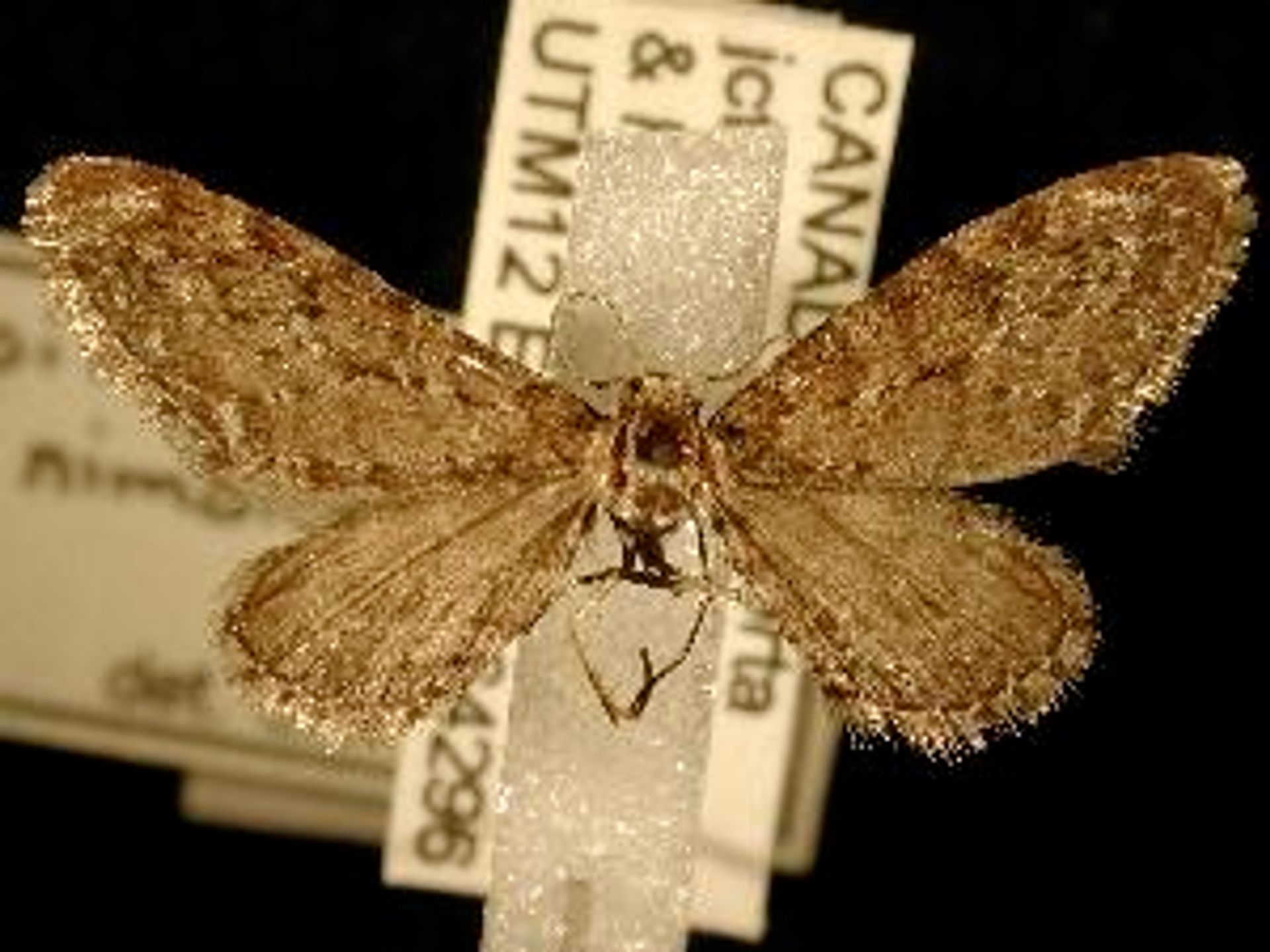
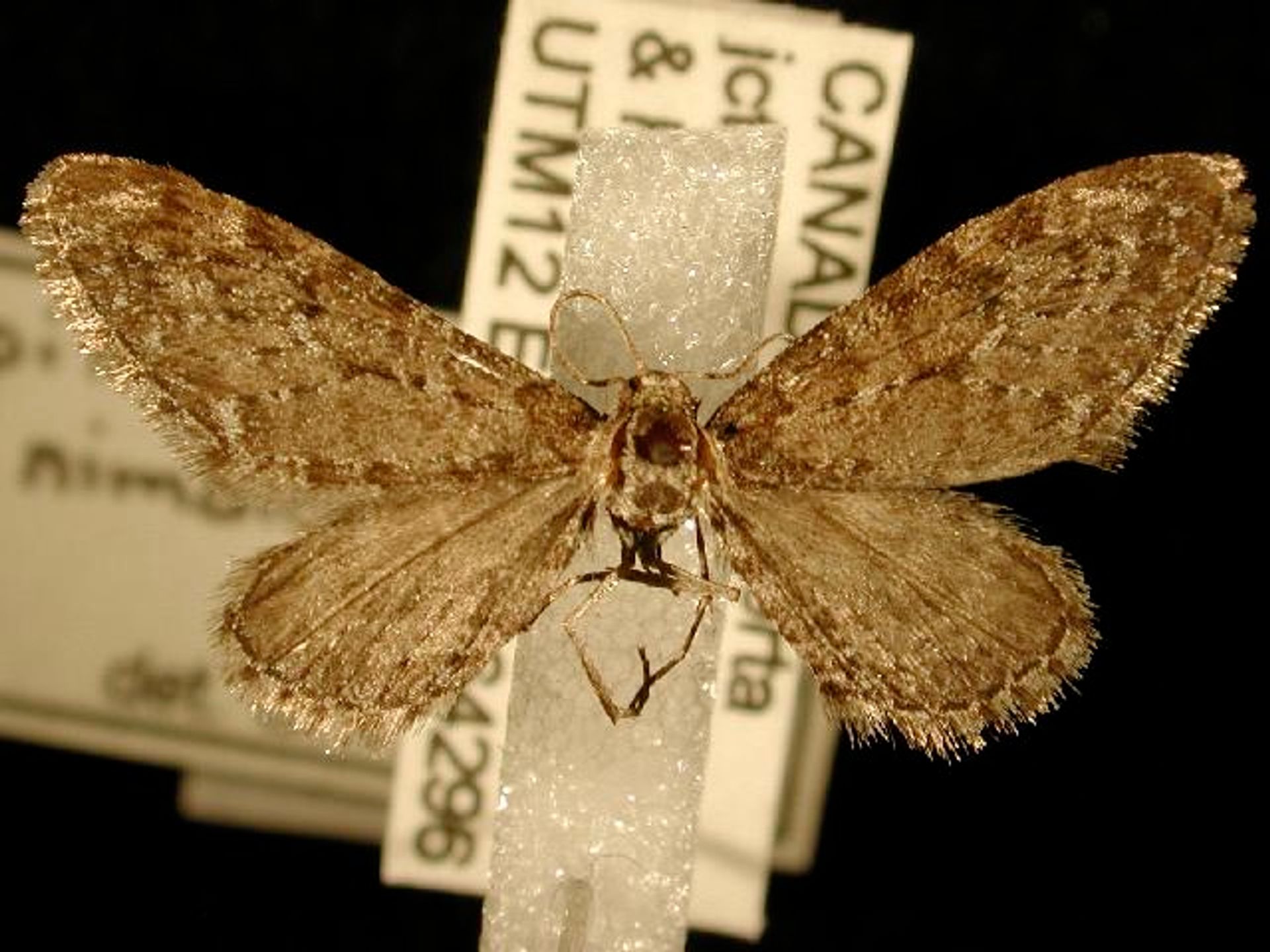
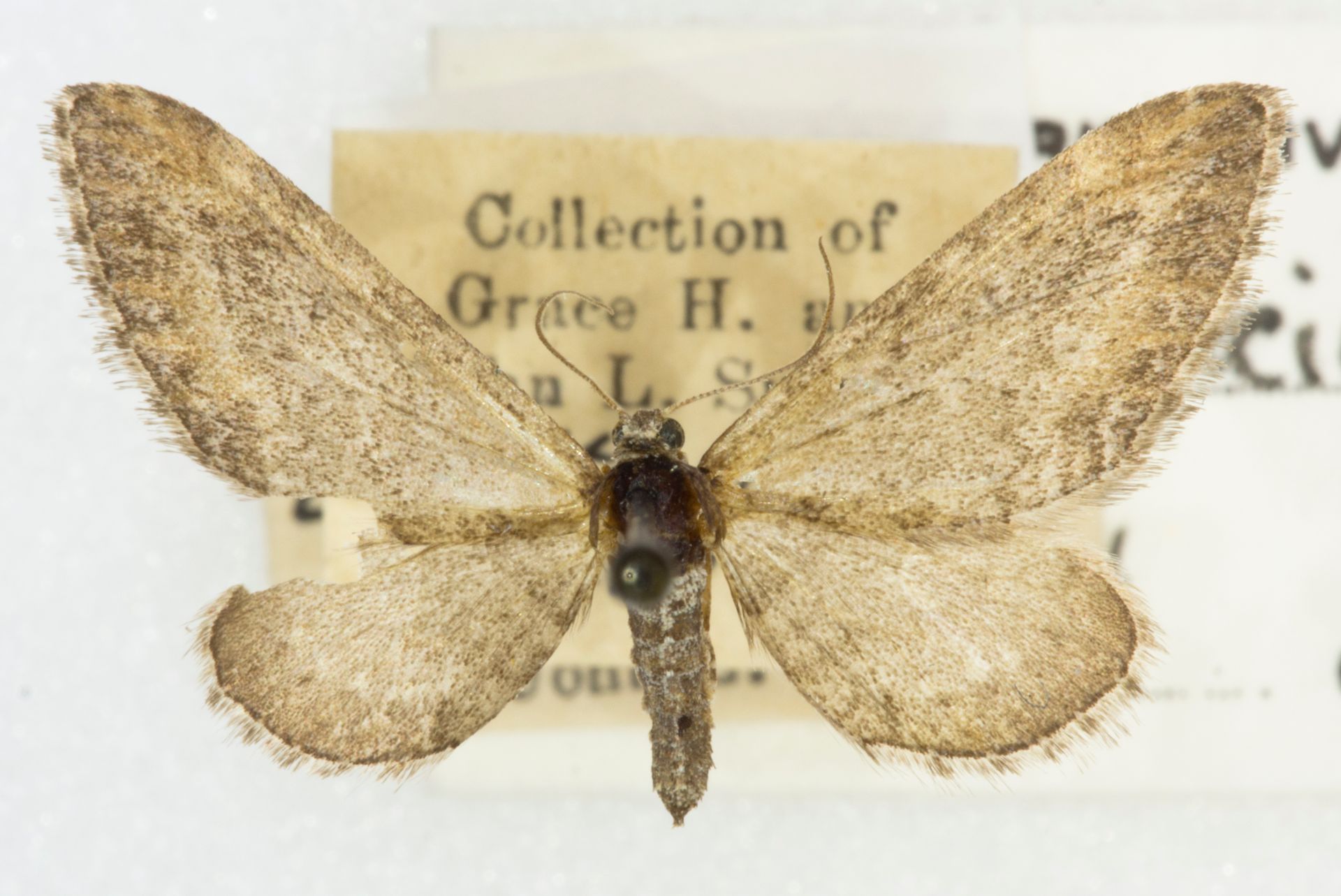
A small geometrid of the pug group, first described in 1896. are active in late spring and early summer across a broad North American range from Alaska and Newfoundland to Arizona. The is one of several Eupithecia moths documented visiting apple flowers at night, contributing to pollination of crops. Larvae feed on a diverse array of plants including flowers of Achillea and Castilleja, and foliage of willows, roses, and currants.
Pronunciation
How to pronounce Eupithecia nimbicolor: //juːˈpɪθi.ə ˈnɪmbɪˌkɔːlɔr//
These audio files are automatically generated. While they are not always 100% accurate, they are a good starting point.
Identification
Narrow-winged resting posture typical of Eupithecia pug moths. Positive identification to level requires examination of genitalia or other microscopic characters. Distinguished from other small geometrids by combination of size, wing shape, and geographic range. Similar to other Eupithecia species but separable by dissection.
Images
Habitat
Found in varied environments across its broad North American range; specific associations not well documented in available sources.
Distribution
North America: eastern Newfoundland and Labrador west to British Columbia; north to Alaska, south to Arizona. Canadian provinces: Alberta, Manitoba, Saskatchewan.
Seasonality
on wing from mid-May to mid-July in northern parts of range.
Diet
Larvae feed on flowers of Achillea and Castilleja , and on foliage of Salix (willows), Rosa (roses), Potentilla fruticosa (shrubby cinquefoil), and Ribes (currants/gooseberries). feeding habits not documented.
Behavior
are attracted to light. Has been observed visiting apple flowers at night, suggesting foraging .
Ecological Role
Documented as a visitor to apple flowers in Arkansas orchards, contributing to nighttime pollination services. Larvae are herbivores on diverse flowering plants and shrubs.
Human Relevance
Contributes to pollination of apple crops and potentially other fruit production. Larvae are not documented as agricultural pests.
Similar Taxa
- Other Eupithecia speciesAll share narrow wings and pug moth resting posture; require genitalia dissection or microscopic examination for reliable -level identification.
- Other small GeometridaeSimilar size and general appearance; Eupithecia distinguished by characteristic wing shape and posture.