Eupithecia matheri
Rindge, 1985
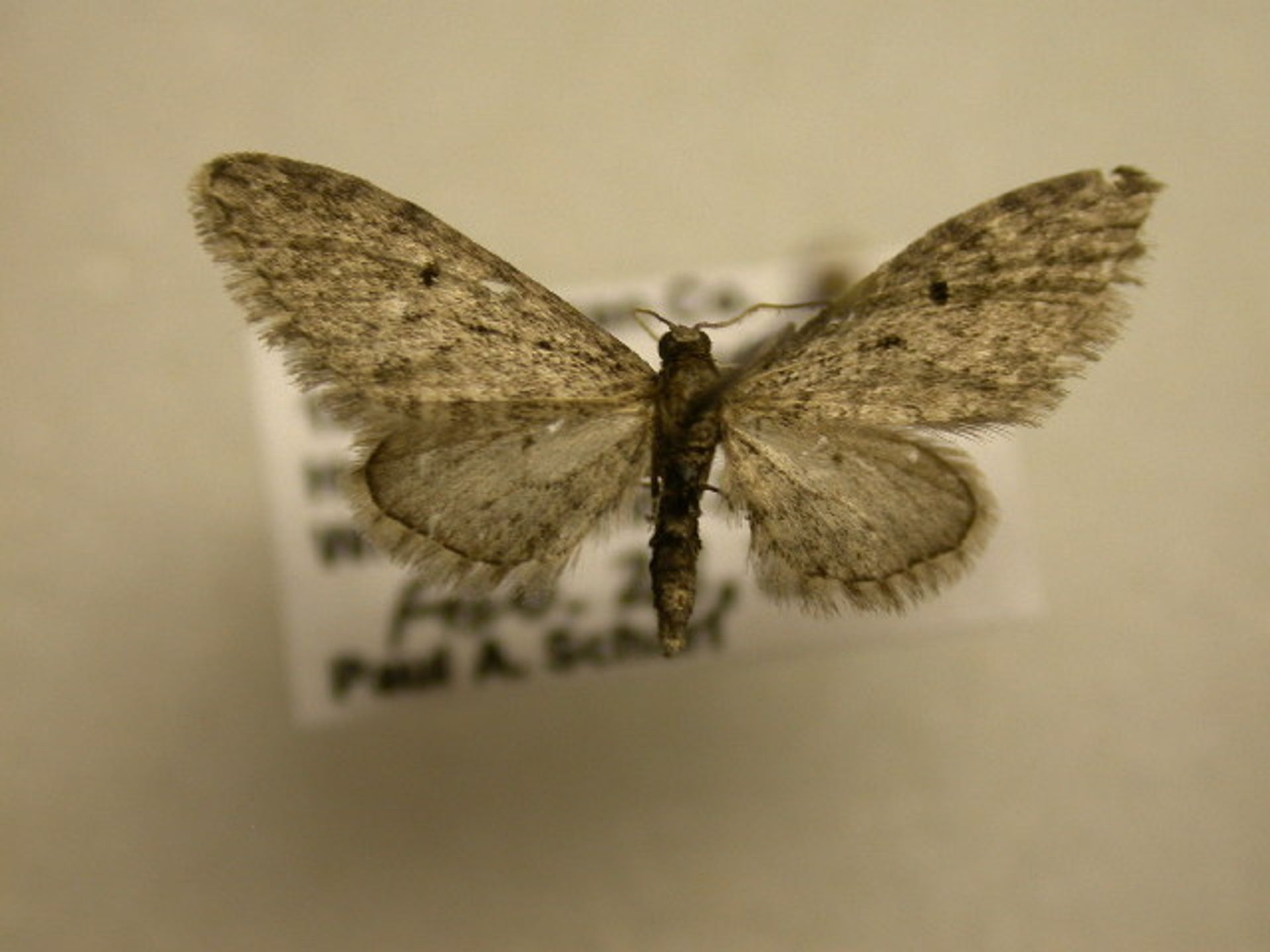
Eupithecia matheri is a small geometrid described by Frederick H. Rindge in 1985. It is one of numerous 'pug' moths in the Eupithecia, characterized by narrow wings and a distinctive resting posture. are active in late winter and early spring, with records from late January through early April. The has been documented visiting apple flowers at night, contributing to pollination services.
Pronunciation
How to pronounce Eupithecia matheri: /juːˈpɪθiə ˈmeɪθəri/
These audio files are automatically generated. While they are not always 100% accurate, they are a good starting point.
Identification
Male forewings measure 9 mm; female forewings 8.5–10 mm. As a member of the 'pug' group within Eupithecia, it exhibits the -typical narrow wings and unique resting posture that distinguishes these from other geometrids. -level identification requires examination of genitalic characters.
Images
Distribution
United States: Connecticut, New York, New Jersey, Pennsylvania, Virginia, North Carolina, Mississippi, Louisiana, Texas, and possibly Kansas.
Seasonality
on wing from late January to early April.
Behavior
have been observed visiting apple flowers at night, indicating activity and potential participation in nighttime pollination.
Ecological Role
Documented as a visitor to apple flowers, contributing to pollination services in agricultural settings. As a member of a diverse geometrid , larvae likely function as herbivores, though specific plants for this remain unrecorded.
Human Relevance
Observed as a nighttime of apple crops, suggesting potential value in orchard alongside more commonly recognized pollinators.
Similar Taxa
- Other Eupithecia speciesAll share narrow wings and characteristic resting posture; -level separation requires dissection and examination of genitalia.