Eupithecia interruptofasciata
Packard, 1873
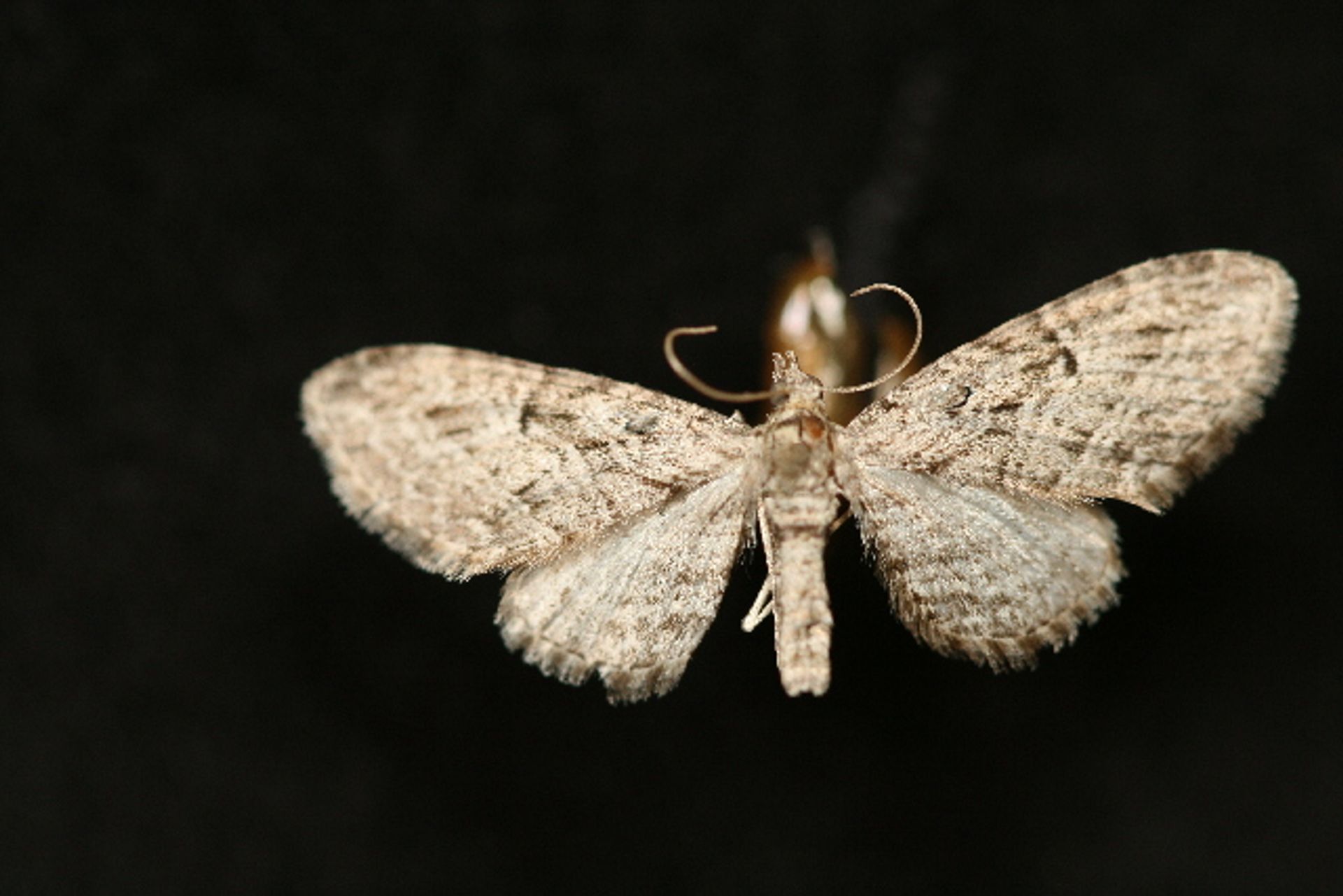
Eupithecia interruptofasciata is a of pug moth in the Geometridae, first described by Packard in 1873. Like other members of the Eupithecia, it possesses narrow wings and exhibits a distinctive resting posture. The species has been documented visiting apple flowers at night, contributing to pollination services. It occurs in North America with records from Canada and the northeastern United States.
Pronunciation
How to pronounce Eupithecia interruptofasciata: /juːˈpɪθ.i.si.ə ˌɪn.təˈrʌp.toʊ.fəˈsiː.eɪ.tə/
These audio files are automatically generated. While they are not always 100% accurate, they are a good starting point.
Identification
Members of Eupithecia are recognized by their narrow wings and unique resting posture. -level identification within this typically requires examination of genitalia or other minute morphological characters not visible without magnification or dissection. Eupithecia interruptofasciata would require determination for definitive identification.
Images
Appearance
Narrow wings characteristic of the Eupithecia. Specific wing pattern details for this are not documented in available sources.
Habitat
Dry, mixed conifer forest with oak components at elevations around 7,000 feet has been documented as supporting Eupithecia . Available records indicate presence in forested environments.
Distribution
North America: recorded from Alberta, Manitoba, and Saskatchewan in Canada; Vermont in the United States. The full range extent is not comprehensively documented.
Seasonality
activity period is not specifically documented for this . Eupithecia species generally fly during warmer months.
Behavior
Attracted to artificial light sources at night. Has been observed visiting apple flowers, suggesting foraging activity.
Ecological Role
Documented as a visitor to apple flowers, contributing to pollination services. The 2021 study in Journal of Economic Entomology identified Eupithecia as among the nocturnal insects visiting apple blossoms, with nocturnal pollination achieving comparable seed set to pollination.
Human Relevance
Contributes to agricultural pollination, specifically in apple production. Recognized as part of the that supports crop yields.
Similar Taxa
- Other Eupithecia speciesAll share narrow wings and similar resting posture; -level separation requires examination of genitalia or wing pattern details
- Eupithecia pusillata (juniper pug)Similar -level ; E. pusillata is a Palearctic and Nearctic with known juniper association, whereas E. interruptofasciata is a distinct species with separate distribution
More Details
Pollination Research
A 2021 study by Stephen Robertson, Ph.D. and colleagues documented Eupithecia visiting apple flowers at night in Arkansas orchards. The study demonstrated that , including Eupithecia , contribute significantly to apple pollination with seed set levels comparable to pollination.