
Eupithecia agnesata
Taylor, 1908
pug moth
Eupithecia agnesata is a small geometrid described by Taylor in 1908. It occurs in western North America from California through Oregon, Washington, and Wyoming to British Columbia. are active from April to September and have been observed visiting apple flowers, contributing to pollination services.
Pronunciation
How to pronounce Eupithecia agnesata: /juː.pɪˈθiː.ʃə æɡ.nəˈsɑː.tə/
These audio files are automatically generated. While they are not always 100% accurate, they are a good starting point.
Identification
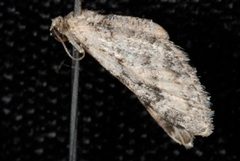
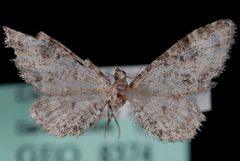
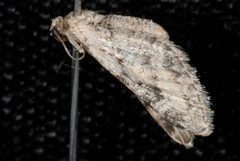
Recognizable as a member of Eupithecia by narrow wings and unique resting posture typical of 'pug' . Specific identification to E. agnesata requires examination of wing pattern details: grey forewings with black transverse lines and brown discal shading. Many Eupithecia are extremely similar externally; definitive identification often requires genitalia dissection.
Images
Appearance
Small with wingspan approximately 18 mm. Forewings grey with dark mixed throughout, featuring black transverse lines and brown shading in the discal area. Typical of the Eupithecia, have narrow wings and a distinctive resting posture.
Distribution
Western North America: California, Oregon, Washington, Wyoming, and British Columbia.
Seasonality
on wing from April to September.
Behavior
. have been observed visiting apple flowers at night, contributing to pollination.
Ecological Role
function as . A study in Arkansas documented Eupithecia visiting apple flowers at night, demonstrating their contribution to pollination services in fruit production.
Human Relevance
Contributes to pollination of apple crops and potentially other flowering plants. The Eupithecia includes caterpillars that feed on various plants; one comment suggests possible association with yarrow (Achillea), though this requires verification for E. agnesata specifically.
Similar Taxa
- Other Eupithecia speciesMost Eupithecia are extremely similar in external appearance, requiring genitalia examination for definitive identification. E. agnesata is distinguished by its specific wing pattern and geographic range.
- Other GeometridaeEupithecia are recognized by their narrow wings and characteristic resting posture, unlike broader-winged geometrids.
More Details
Pollination Research
A 2021 study in the Journal of Economic Entomology documented Eupithecia as visitors to apple flowers in Arkansas, highlighting their role alongside other night-flying insects in crop pollination. This represents one of the few documented ecological interactions for this .