
Trichodezia albovittata
(Guenée, 1857)
white-striped black moth, White-striped Black
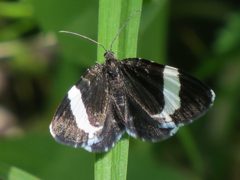
A small geometrid with a distinctive black-and-white pattern. are exclusively , an unusual trait among geometrids. The retains functional hearing organs despite its daytime activity, representing an evolutionary puzzle of sensory persistence without apparent pressure from bats.
Pronunciation
How to pronounce Trichodezia albovittata: /ˌtɹɪkoʊˈdiːziə ˌælbəʊvɪˈtɑːtə/
These audio files are automatically generated. While they are not always 100% accurate, they are a good starting point.
Identification
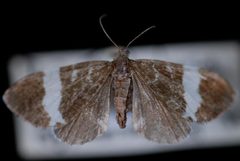
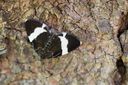
Distinguished from other black geometrids by the clean, continuous white longitudinal stripe on all wings rather than spots, bands, or broken markings. The combination of small size (20–25 mm wingspan), activity, and bold striped pattern separates it from relatives such as Melanippe and Melanolophia .
Images
Appearance
Wingspan 20–25 mm. Forewings black with a prominent white longitudinal stripe running from base to apex. Hindwings similarly patterned with black ground color and white stripe. Body slender, typical of geometrid moths. .
Habitat
Moist woodland edges, stream corridors, and shaded areas where Impatiens (touch-me-nots) grow. Associated with riparian and wetland margins in forested regions.
Distribution
Transcontinental in North America: Alaska to Newfoundland and Labrador, south to North Carolina in the east and northern California in the west. Records from Alberta, Manitoba, Saskatchewan, and Vermont confirm presence across northern tier of continent.
Seasonality
active April through September. Multivoltine with extended period suggesting overlapping .
Diet
Larvae feed on Impatiens (touch-me-nots). feeding habits not documented.
Host Associations
- Impatiens - larval foodplant-level association; specific not detailed in sources
Life Cycle
Complete . Larval stage feeds on Impatiens foliage. and stage not documented in available sources.
Behavior
Exclusively —unusual for Geometridae. Possesses well-developed tympanal ears with neural sensitivity to ultrasound comparable to relatives. Responds to ultrasound with evasive maneuvers despite absence of bat pressure during daytime activity. This functional hearing in a diurnal context suggests evolutionary lag or maintenance of sensory capacity without current selective benefit.
Ecological Role
Larval herbivore on native Impatiens . role as or prey item not documented. activity may expose adults to avian rather than bat predation.
Human Relevance
None documented. Not a pest ; plants are native wildflowers rather than cultivated crops.
Similar Taxa
- Trichodezia californiataSimilar striped pattern but differs in distribution (western) and wing pattern details; T. albovittata has continuous stripe versus more fragmented markings in related
- Melanippe species black geometrids with different wing patterns—spots or bands rather than clean longitudinal stripes
More Details
Evolutionary significance
T. albovittata is a key study organism for understanding sensory system regression. Despite complete diurnality and isolation from bat , it retains sensitive hearing and ultrasound-evoked escape responses. This challenges simple predictions of vestigialization and suggests complex evolutionary dynamics in sensory system maintenance.
Subspecies
Two recognized: nominate T. a. albovittata and T. a. tenuifasciata Barnes & McDunnough, 1917. The latter described from more restricted range with narrower wing markings.