
Synchlorini
Genus Guides
1- Synchlora(Emerald moths)
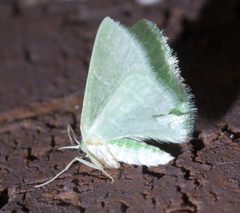
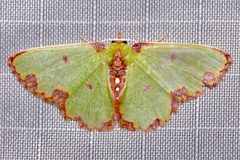
Synchlorini is a tribe within the Geometrinae of the Geometridae , commonly known as the emerald moths. The tribe contains characterized by bright green coloration and relatively broad wings. in this tribe are primarily Neotropical in distribution. The group has received limited taxonomic study compared to other geometrine tribes, with ongoing revisions clarifying generic boundaries.

Pronunciation
How to pronounce Synchlorini: /sɪnkləˈroʊnaɪ/
These audio files are automatically generated. While they are not always 100% accurate, they are a good starting point.
Identification
Members of Synchlorini can be distinguished from other Geometrinae tribes by a combination of wing venation characters and male genitalia structure, particularly the arrangement of cornuti in the . The bright green coloration, while shared with many Geometrinae, tends to be more uniform and less marked with transverse lines in many Synchlorini . Distinguishing Synchlorini from the tribe Nemoriini, which also contains green Neotropical geometrids, requires examination of tympanal organ structure and detailed wing venation patterns.
Images
Habitat
in this tribe are found in tropical and subtropical forest , including lowland rainforests, cloud forests, and montane forests. They occur at elevations ranging from sea level to approximately 2000 meters.
Distribution
Neotropical region, including Mexico, Central America, South America, and the Caribbean islands.
Similar Taxa
- NemoriiniAlso contains green Neotropical geometrids; distinguished by tympanal organ structure and wing venation
- GeometriniContains green geometrids but primarily Old World distribution; distinguished by distribution and genitalic characters