
Chlorosea roseitacta
Prout, 1912
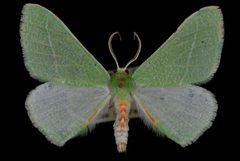
Chlorosea roseitacta is a of emerald moth in the Geometridae, first described by Prout in 1912. It belongs to the Geometrinae, commonly known as the emerald moths for their characteristic green coloration. The species is documented from North America, though detailed biological information remains limited.
Pronunciation
How to pronounce Chlorosea roseitacta: /klɔɹoʊˈsiːə roʊˌziːˈtæk.tə/
These audio files are automatically generated. While they are not always 100% accurate, they are a good starting point.
Identification
As a member of the emerald moth Geometrinae, likely exhibit green coloration typical of the group. Specific diagnostic features distinguishing C. roseitacta from and other North American emerald have not been documented in available sources.
Images
Distribution
North America. Specific regional distribution details beyond this continental range are not established in available sources.
Similar Taxa
- Other Chlorosea speciesCongeneric within Chlorosea share the emerald moth and would require examination of genitalia or wing pattern details for reliable separation; specific distinguishing characters for C. roseitacta are not documented.
- Other Geometrinae in North AmericaMultiple emerald moth occur in North America with similar green appearance; accurate identification to level typically requires examination.
More Details
Taxonomic note
The was described by Louis Beethoven Prout in 1912. The Chlorosea is placed in the Geometrinae, a group characterized by slender bodies and often bright green wings in .
Data availability
The has 39 observations recorded on iNaturalist as of the source date, indicating it is documented but not extensively studied. Published biological data beyond basic and distribution appears sparse.