Hemithea aestivaria
(Hübner, 1789)
Common Emerald
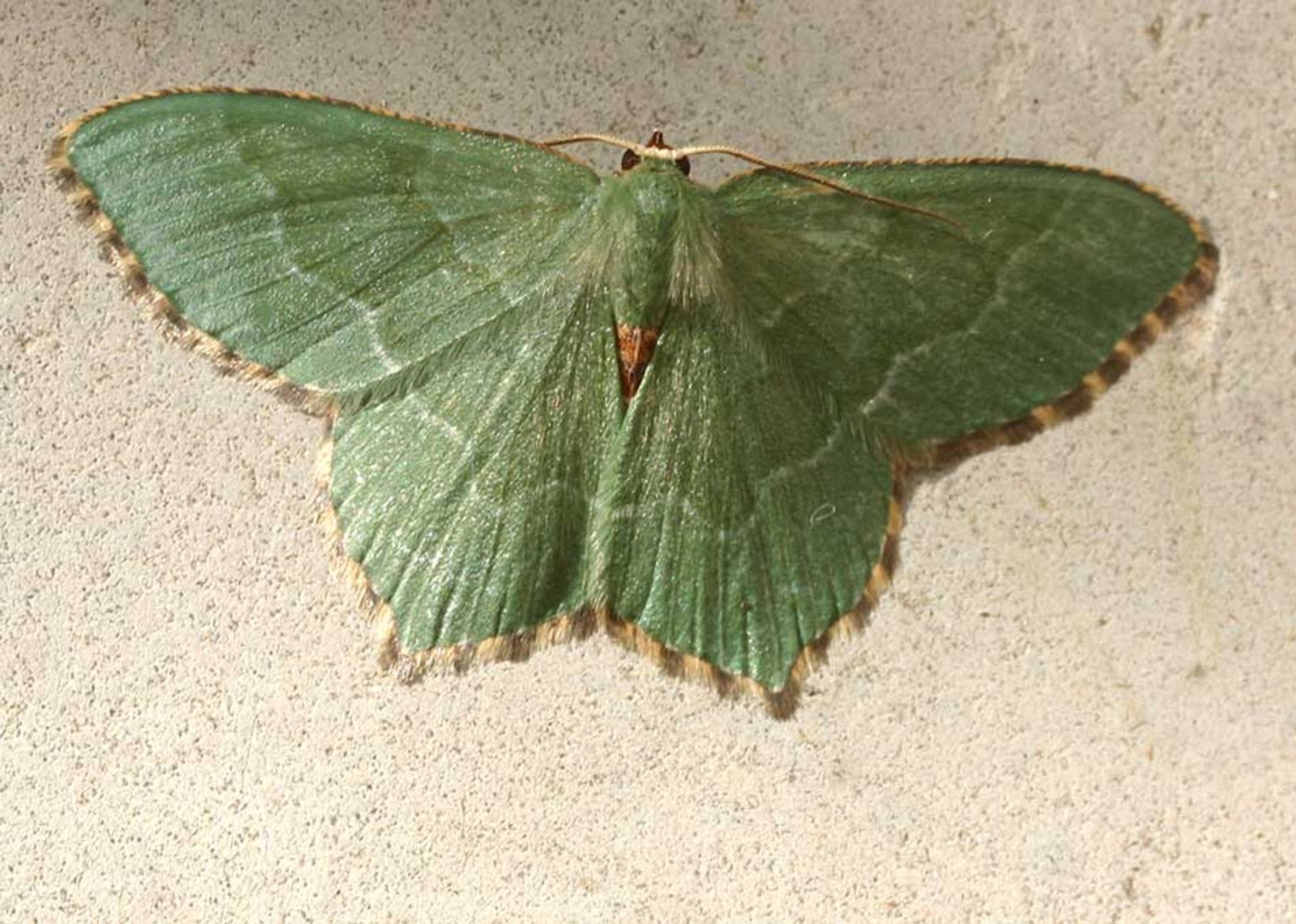
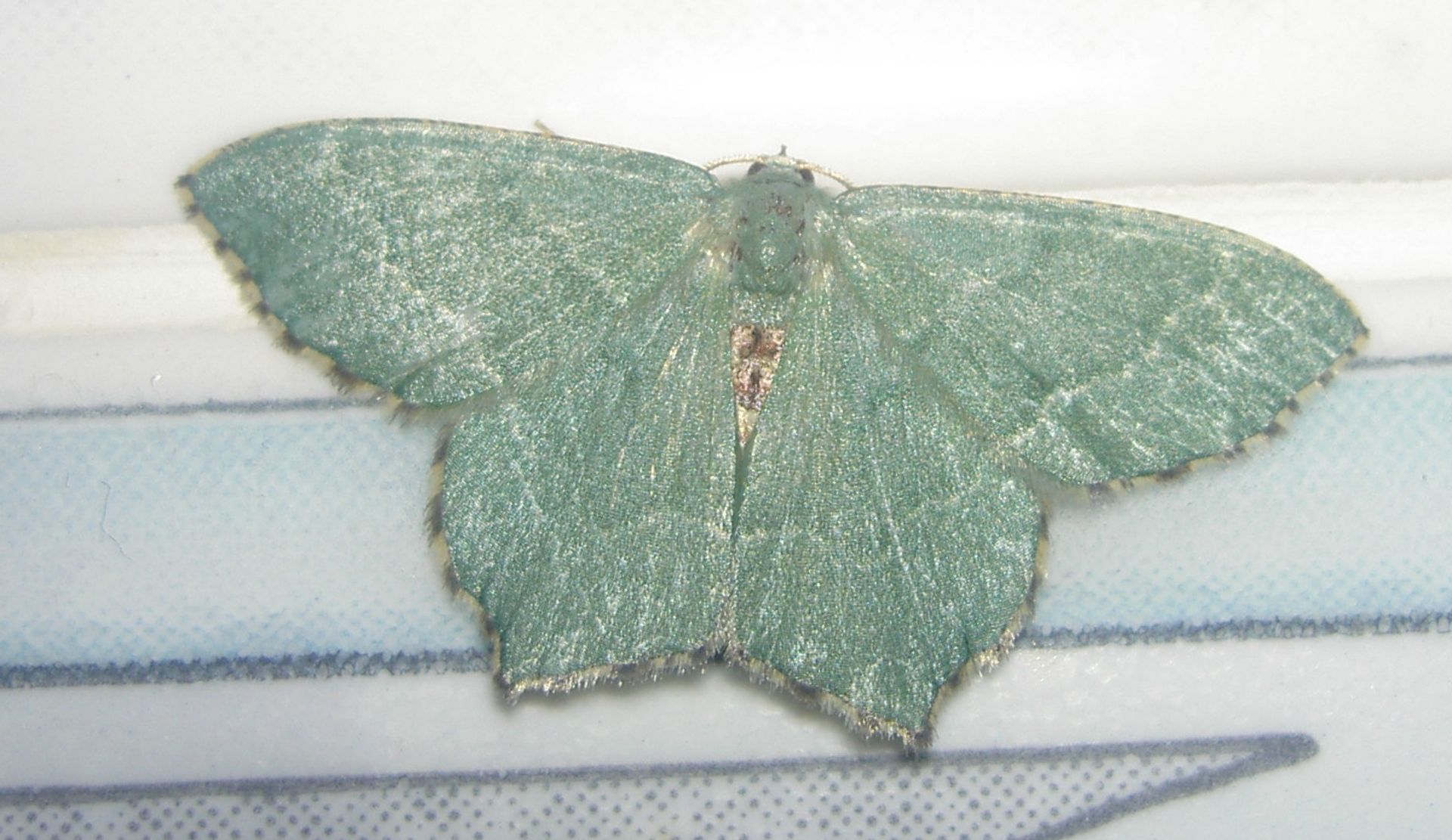
Hemithea aestivaria, the Common Emerald, is a geometrid native to Eurasia and accidentally introduced to North America. Its blue-green wing coloration derives from the pigment geoverdin, which is light-sensitive and fades in both living individuals and dried specimens. The has been sequenced with a 501.7 Mb assembly containing 31 chromosomal pseudomolecules and 18,477 protein-coding genes. In its native range it is , while introduced in Japan have been observed to be .
Pronunciation
How to pronounce Hemithea aestivaria: //hɛmɪˈθiːə ɛsˌtɪˈvɛəriə//
These audio files are automatically generated. While they are not always 100% accurate, they are a good starting point.
Identification
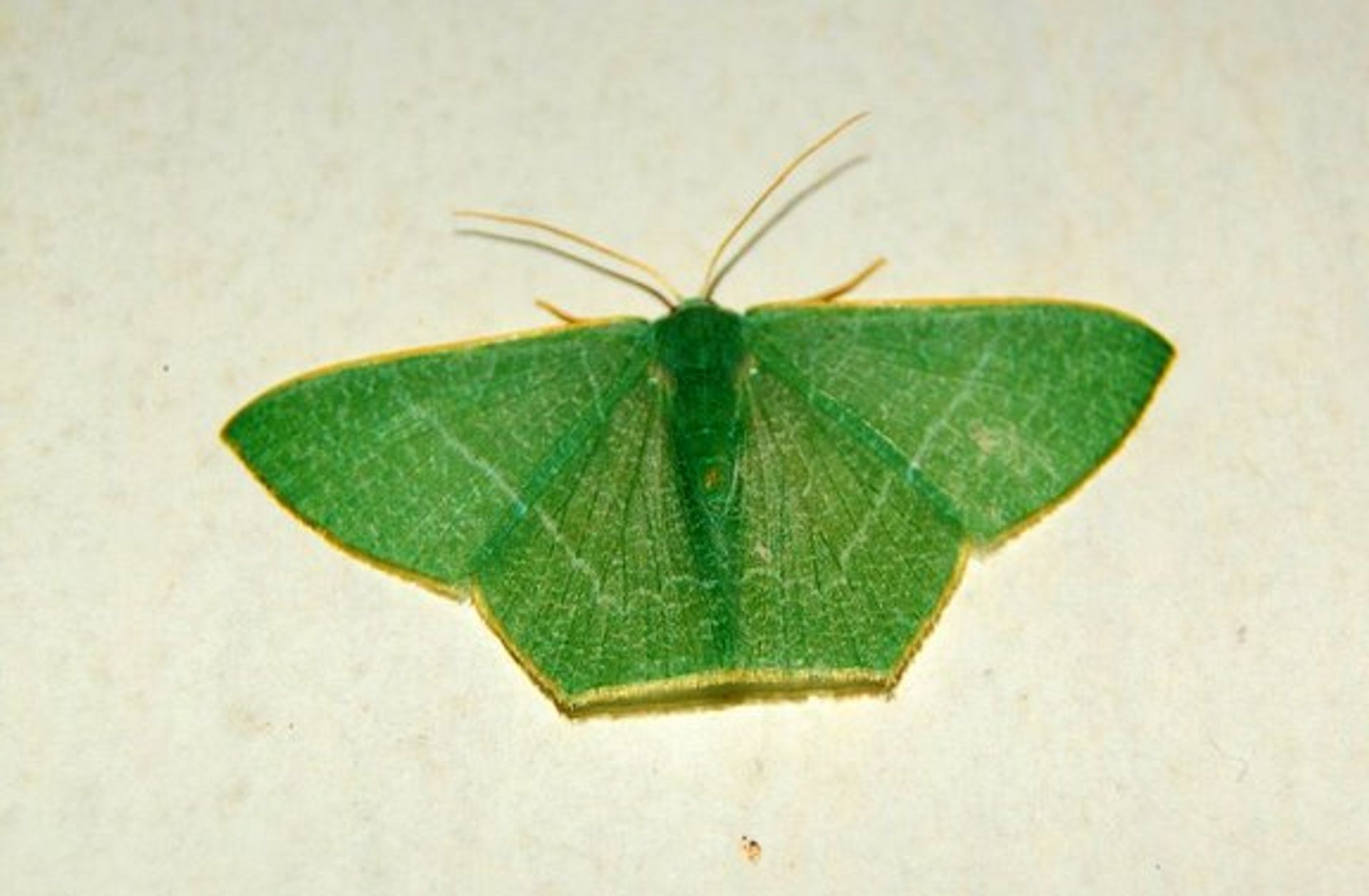
The emerald green wing coloration is distinctive, though fading must be considered when examining preserved material. The can be distinguished from similar green geometrids by its distribution and period in combination with color characteristics. are attracted to light traps, facilitating detection.
Images
Appearance
display blue-green wings with a characteristic emerald coloration produced by the pigment geoverdin. The wingspan is moderate for geometrid moths. The green coloration fades with exposure to light, affecting both living and preserved specimens.
Habitat
Woodland , particularly in southern England where it is most abundant. Specimens have been collected from deciduous woodland environments such as Wytham Woods, Oxfordshire.
Distribution
Native to Eurasia from Portugal and Ireland eastward to Japan and Korea. Most common in southern England with northern limit in southern Scotland. Introduced to North America: British Columbia (first recorded 1979), Oregon, Washington State, and since 2019 to Ontario, Québec, and Nova Scotia in Canada.
Seasonality
fly in summer ( in Europe). In Japan, a pattern has been observed.
Diet
Larvae are : feed on low-growing herbaceous plants in autumn, then after feed on leaves of woody trees and bushes.
Life Cycle
in Europe with flying in summer; in Japan. Larvae feed in autumn on herbaceous plants, overwinter, then continue feeding on woody plants. presumably follows larval development, though specific pupal details are not documented in available sources.
Behavior
are attracted to light traps. The green wing pigment geoverdin is light-sensitive, causing color to fade in living individuals and dried specimens.
Ecological Role
Minor pest of apple orchards in the introduced range (Pacific Northwest of North America). Otherwise functions as a herbivore in woodland .
Human Relevance
Accidentally introduced to North America, where it has established and causes minor damage to apple orchards in the Pacific Northwest. Subject of genomic research with published assembly.
Similar Taxa
- Other green geometrid mothsSimilar emerald coloration; distinguished by distribution, period, and fading characteristics of geoverdin pigment
More Details
Genomic Resources
assembly of 501.7 Mb with 31 chromosomal pseudomolecules (30 + Z ) and 18,477 protein-coding genes. Published in Wellcome Open Research 2024.