
Tetracis pallulata
Hulst, 1887
Tetracis pallulata is a geometrid first described by George Duryea Hulst in 1887. The is restricted to western North America, with active in late summer and fall. Larvae feed on conifers in several including Abies, Picea, Pseudotsuga, and Tsuga. The species has been treated under the synonym Synaxis pallulata in some taxonomic treatments.
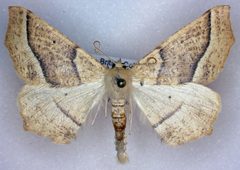
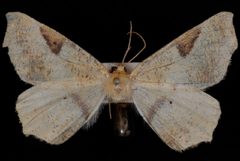
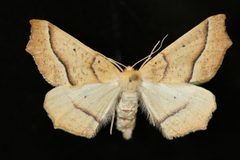
Pronunciation
How to pronounce Tetracis pallulata: /ˈtɛtrəsɪs ˌpæljuˈleɪtə/
These audio files are automatically generated. While they are not always 100% accurate, they are a good starting point.
Identification
Forewing length of 18–24 mm distinguishes this from smaller conifer-feeding geometrids. Geographic range in western North America helps separate it from eastern Tetracis . The combination of late-season period (August–October) and association with western conifer forests supports identification.
Images
Appearance
forewings measure 18–24 mm in length. Specific wing pattern details are not documented in available sources.
Habitat
Coniferous forests from near sea level to 2,200 meters elevation. Associated with trees including white fir (Abies concolor), grand fir (Abies grandis), Engelmann spruce (Picea engelmannii), Sitka spruce (Picea sitchensis), Douglas-fir (Pseudotsuga menziesii), and hemlock (Tsuga heterophylla, Tsuga canadensis).
Distribution
Western North America: southern California north to British Columbia, east to Clearwater County, Idaho and Lewis and Clark County, Montana.
Seasonality
active August to October.
Diet
Larvae feed on conifers: Abies concolor, Abies grandis, Picea engelmannii, Picea sitchensis, Pseudotsuga menziesii, and Tsuga including Tsuga heterophylla and Tsuga canadensis.
Host Associations
- Abies concolor - larval food plantwhite fir
- Abies grandis - larval food plantgrand fir
- Picea engelmannii - larval food plantEngelmann spruce
- Picea sitchensis - larval food plantSitka spruce
- Pseudotsuga menziesii - larval food plantDouglas-fir
- Tsuga heterophylla - larval food plantwestern hemlock
- Tsuga canadensis - larval food planteastern hemlock; noted in records though outside main distribution
Ecological Role
Larval herbivore on coniferous trees; specific ecological impacts have not been documented.
Similar Taxa
- Tetracis species (eastern North America)Eastern Tetracis occupy different geographic ranges; T. pallulata is restricted to western North America.
- Other conifer-feeding GeometridaeForewing length (18–24 mm) and late-season period help distinguish T. pallulata from smaller or earlier-flying .
More Details
Taxonomic history
The has been treated under the Synaxis as Synaxis pallulata in some classifications, though currently accepted as Tetracis pallulata.