
Lambdina vitraria
(Grote, 1883)
Pronunciation
How to pronounce Lambdina vitraria: /læmˈdaɪnə vɪˈtrɛəriə/
These audio files are automatically generated. While they are not always 100% accurate, they are a good starting point.
Identification
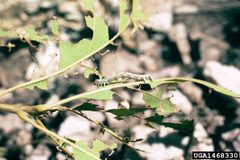
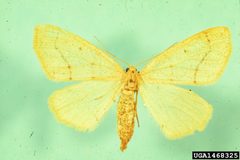
As a member of Lambdina, this likely exhibits the characteristic looping locomotion of geometrid caterpillars. may be distinguished from by wing pattern and geographic distribution, though specific diagnostic features are not documented in available sources. The species name "vitraria" (from Latin vitrum, glass) may allude to translucent wing qualities.
Images
Habitat
Associated with oak woodland where plants occur, specifically in regions supporting Quercus gambelii (Gambel oak).
Distribution
Western North America; confirmed from Arizona and Utah.
Diet
Larva feeds on Quercus , specifically Quercus gambelii (Gambel oak).
Host Associations
- Quercus gambelii - larval food plantGambel oak; primary documented
Ecological Role
Herbivore; larval stage consumes oak foliage. Potential for including ichneumonids in the Pimpla/Coccygomimus, based on documented of congeneric Lambdina punctata.
Similar Taxa
- Lambdina punctataCongeneric oak looper with similar larval habits and associations; may overlap in range and host use
- Lambdina fiscellariaCongeneric hemlock looper; broader distribution but may be confused in areas of sympatry
More Details
Etymology
The specific epithet "vitraria" derives from Latin vitrum (glass), possibly referring to glassy or translucent wing characteristics in the .
Taxonomic history
Described by Augustus Radcliffe Grote in 1883, a prominent 19th-century American lepidopterist.