
Psamatodes abydata
(Guenée, 1858)
Dot-lined angle, Dot-lined and Dark-shaded Angles and Allies
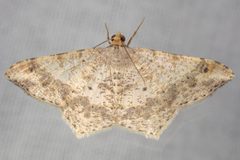
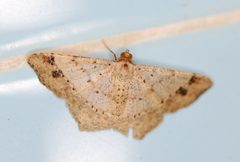
Psamatodes abydata, commonly known as the dot-lined angle, is a geometrid native to the Neotropics and southern United States. The has been introduced to the Pacific region, with established in Hawaii since 1970 and subsequent spread to other Pacific islands. It is recognized as a highly mobile species capable of regular northward beyond its core range. Taxonomic placement has shifted between the Psamatodes and Macaria, with current sources recognizing both names in use.

Pronunciation
How to pronounce Psamatodes abydata: //ˌsæməˈtoʊdiːz ˌæbɪˈdeɪtə//
These audio files are automatically generated. While they are not always 100% accurate, they are a good starting point.
Identification
Distinguished from similar geometrid moths by the combination of dot-lined wing pattern and dark shading. The angled wing margins separate it from more uniformly rounded-wing geometrids. May be confused with related Macaria where ranges overlap; examination of genitalia or detailed wing pattern analysis may be required for definitive identification.
Images
Appearance
Medium-sized geometrid with characteristic pattern of fine dots and lines on the wings. Wing pattern includes dark shading with distinct dot-lined markings that provide the . Forewings typically show angled or irregular outer margins typical of the 'angle' moth group within Geometridae.
Habitat
Found in diverse environments from subtropical to temperate zones; occupies both natural and disturbed . In native range, associated with woodland edges and open areas. In introduced Pacific range, has colonized varied habitats including urban and agricultural areas.
Distribution
Native range: northern Argentina through Caribbean to southern United States (Arizona to Florida). Regularly wanders north to Colorado, Kentucky, and other northern states. Introduced range: Hawaii (first recorded 1970, established on all main islands by 1984), with subsequent spread to other Pacific localities. Present in Oceania according to distribution records.
Seasonality
activity occurs during warmer months in temperate portions of range; likely multivoltine or continuously breeding in tropical and subtropical regions. Specific varies by latitude.
Behavior
Known for strong capability, including regular northward movement beyond core breeding range. Rapid of new areas following introduction to Pacific islands suggests high mobility and adaptability.
Human Relevance
Subject of entomological interest due to documented invasion history and range expansion in Pacific region. Not known to be of significant economic importance.
Similar Taxa
- Macaria speciesHistorical taxonomic confusion and overlapping morphological characteristics; P. abydata has been classified under Macaria and may co-occur with in some regions
- Other Psamatodes speciesShared characteristics including angled wing margins and similar size; identification requires examination of specific wing pattern details
More Details
Taxonomic note
This has been treated under both Psamatodes and Macaria in recent literature. GBIF recognizes Macaria abydata as the accepted name with Psamatodes abydata as a synonym, while NCBI and iNaturalist maintain Psamatodes abydata. Users should be aware of dual when consulting sources.
Invasion history
Documented as one of the more successful Lepidoptera introductions to Pacific islands, with rapid establishment across the Hawaiian archipelago within 14 years of initial detection.