
Macaria transitaria
Walker, 1861
Blurry Chocolate Angle
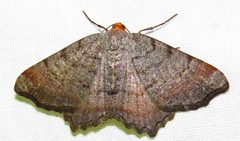
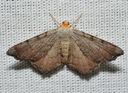
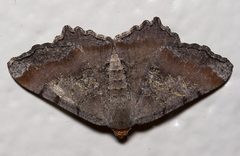
Macaria transitaria is a small geometrid commonly known as the blurry chocolate angle. It is native to North America and recognized by its relatively compact wingspan of 23–26 mm. The is associated with pine forests, as its larvae feed on Pinus species.
Pronunciation
How to pronounce Macaria transitaria: /məˈkɛər.i.ə trænˈsɪt.ər.i.ə/
These audio files are automatically generated. While they are not always 100% accurate, they are a good starting point.
Identification
Distinguished from other Macaria by the combination of small size (23–26 mm wingspan) and North American distribution. The "blurry" quality of its wing patterning may separate it from more sharply marked , though precise diagnostic characters require examination of genitalia or reference to specialized geometrid keys.
Images
Appearance
Small with wingspan of 23–26 mm. The "blurry chocolate angle" suggests brownish wing coloration with indistinct patterning, though specific markings are not documented in available sources.
Habitat
Associated with pine-dominated forests and woodlands, given larval relationship with Pinus .
Distribution
North America. Specific records include the northeastern United States (Vermont).
Diet
Larva feeds on Pinus (pines). feeding habits are not documented.
Host Associations
- Pinus - larval plant-level feeding confirmed; specific Pinus not documented
Ecological Role
Larval herbivore on pine trees; contributes to nutrient cycling in coniferous forest .
Similar Taxa
- Macaria bisignata (Red-headed Inchworm)Similar size and preference; M. bisignata has more distinct markings and different larval preferences
- Other Macaria speciesMany share brown coloration; accurate identification requires examination of wing pattern details or genitalia
More Details
Taxonomic Authority
Walker, 1861
Observation Frequency
Over 2,000 observations recorded on iNaturalist, indicating it is a relatively well-documented within its range