
Digrammia irrorata
(Packard, 1876)
Pale-lined Angle
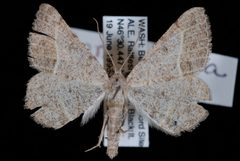
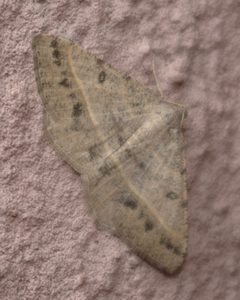
Digrammia irrorata is a geometrid first described by Alpheus Spring Packard in 1876. It occurs across western North America from Oklahoma to California, extending north into southwestern Canada. The species has a wingspan of 23–26 mm. are active from March through June in northern , with multiple occurring in southern portions of the range.
Pronunciation
How to pronounce Digrammia irrorata: /dɪˈɡræmiə ɪˌrɔːˈreɪtə/
These audio files are automatically generated. While they are not always 100% accurate, they are a good starting point.
Identification
Can be distinguished from other Digrammia by its specific wing pattern and geographic distribution. The D. i. rubricata (California) and D. i. venosata differ in coloration and pattern details. Accurate identification to species level typically requires examination of genitalia or reference to regional identification keys for western North American geometrids.
Images
Appearance
Wingspan 23–26 mm. As a member of the Digrammia, display cryptic coloration typical of geometrid moths, with patterning that provides camouflage against bark or rock substrates. The specific epithet "irrorata" (meaning sprinkled or bedewed) suggests a speckled or mottled wing pattern. Detailed coloration and pattern descriptions are not available in the provided sources.
Habitat
Associated with dry, open in western North America. Specific microhabitat preferences are not documented, but the Digrammia generally occupies rocky areas, woodlands, and scrublands where larval plants occur.
Distribution
Western United States and southwestern Canada. Range extends from Oklahoma west to California, north to British Columbia and Alberta. Also recorded in Saskatchewan. The occupies a broad latitudinal gradient with corresponding variation in voltinism.
Seasonality
are on wing from March to June in northern parts of the range. Multiple occur annually in southern , though specific numbers are not documented.
Life Cycle
Complete with , larval, pupal, and stages. The larval food plant is unknown. Voltinism varies geographically: or partially in the north, with several in the south.
Behavior
are and attracted to light. Specific behavioral traits such as patterns, mating , or larval habits have not been documented.
Ecological Role
may serve as prey for including bats and birds. Larvae, if folivorous as typical for the , would function as primary consumers. Specific ecological interactions are undocumented.
Human Relevance
No documented economic or agricultural significance. The is not known to be a pest. Occasionally encountered by enthusiasts at light stations.
Similar Taxa
- Digrammia muscariataOccurs in overlapping range (western North America) and shares similar cryptic geometrid ; distinguished by wing pattern details and genitalia
- Digrammia californiariaSympatric in California and adjacent regions; similar size and preferences; separated by pattern and structural characters
More Details
Subspecies
Three are recognized: D. i. irrorata (nominate), D. i. rubricata Ferguson, 2008 (restricted to California), and D. i. venosata (McDunnough, 1939). These differ primarily in wing coloration and pattern intensity.
Nomenclatural History
Originally described as Phasiane irrorata by Packard in 1876; subsequently transferred to the Digrammia.
Sources and further reading
- BugGuide
- Wikipedia
- GBIF taxonomy match
- iNaturalist taxon
- NCBI Taxonomy
- Catalogue of Life
- What Will You See at Bohart Museum Open House | Bug Squad
- Blacklighting at the Bohart: They Saw the Light | Bug Squad
- Oh, What a (Moth) Night! | Bug Squad
- Bug Eric: National Moth Week Recap for Colorado Springs
- Oedemeridae | Beetles In The Bush
- March | 2015 | Beetles In The Bush