
Thallophaga hyperborea
(Hulst, 1900)
Northern Thallophaga
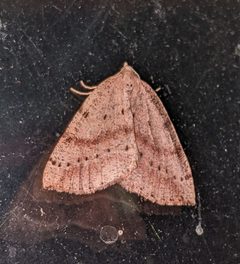
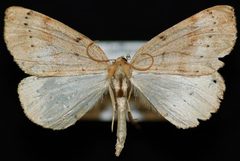
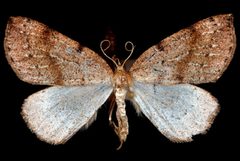
Thallophaga hyperborea, known as the northern thallophaga, is a geometrid described by George Duryea Hulst in 1900. The occurs in western North America from California through British Columbia to the Alaskan Panhandle. are active in spring, with larvae feeding on conifers including western hemlock, Douglas fir, and red cedar.
Pronunciation
How to pronounce Thallophaga hyperborea: /ˈθæloʊˌfæɡə ˌhaɪpərˈbɔriə/
These audio files are automatically generated. While they are not always 100% accurate, they are a good starting point.
Identification
Distinguishing features from similar Thallophaga are not documented in available sources.
Images
Appearance
Wingspan 30–37 mm. Specific coloration and pattern details are not documented in available sources.
Habitat
Associated with coniferous forests where larval plants occur. Specific requirements beyond host plant presence are not documented.
Distribution
Western North America: California, USA; British Columbia, Canada; and the Alaskan Panhandle.
Seasonality
emerge from April to May.
Diet
Larvae feed on western hemlock (Tsuga heterophylla), Douglas fir (Pseudotsuga menziesii), red cedar (Thuja plicata), and other fir (Abies spp.). Larvae have also been recorded on willow (Salix spp.) and alder (Alnus spp.) in addition to conifers.
Host Associations
- Tsuga heterophylla - larval western hemlock
- Pseudotsuga menziesii - larval Douglas fir
- Thuja plicata - larval red cedar
- Abies spp. - larval fir
- Salix spp. - larval willow
- Alnus spp. - larval alder
Life Cycle
Complete with , larva, pupa, and stages. Specific details of developmental timing and stage are not documented.
Ecological Role
Larval herbivore on coniferous and some deciduous trees. Specific ecological impacts are not documented.
More Details
Taxonomic history
Originally described as Tetracis hyperborea by Hulst in 1900; later transferred to Thallophaga.