
Ennomini
Genus Guides
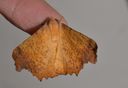
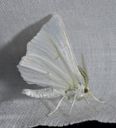
2Ennomini is a tribe of geometer moths within the Ennominae . Members are characterized by large body size relative to other Ennominae and generally subdued coloration. The tribe shows close morphological affinities to Azelinini and Nacophorini, with which it shares several structural features. The group includes economically significant such as the scalloped oak (Crocallis elinguaria) and several thorn moths in the Ennomos.

Pronunciation
How to pronounce Ennomini: /ɛnˈnɔmɪnaɪ/
These audio files are automatically generated. While they are not always 100% accurate, they are a good starting point.
Identification
Distinguished from other Ennominae tribes by the combination of large body size and reduced, non-disruptive wing patterns. Azelinini and Nacophorini are the most similar tribes; Ennomini generally lack the more complex cryptic patterns seen in many Nacophorini. The scalloped oak (Crocallis elinguaria) and thorn moths (Ennomos spp.) are representative and frequently encountered . Hoplosauris has uncertain placement and shows intermediate characters between Nacophorini and Ennomini.
Images
Distribution
Widespread distribution corresponding to that of the Geometridae ; specific range limits not documented separately from the .
Seasonality
activity varies by . The 'thorn' in Ennomos are named for their late-season periods: August thorn (E. quercinaria), September thorn (E. erosaria), and autumn thorn (E. autumnaria) fly during their respective months. Canary-shouldered thorn (E. alniaria) appears earlier in the season.
Human Relevance
Some are of minor economic concern as defoliators of trees. The scalloped oak (Crocallis elinguaria) and scalloped hazel (Odontopera bidentata) are familiar species to European naturalists. Several Ennomos species are known as 'thorn' due to their characteristic resting posture with wings held at an angle, and are used as phenological indicators due to their predictable seasonal periods.
Similar Taxa
- AzelininiClosely related tribe sharing overall body plan and morphological features; distinguished by different wing pattern elements and genitalic characters.
- NacophoriniClosely related tribe with similar large body size; most Nacophorini possess more complex disruptive cryptic wing patterns absent in Ennomini. Phaeoura (including type of Nacophorini) may be more properly placed in Ennomini, indicating possible paraphyly of current tribal boundaries.
- LithininiTribe that may warrant merger with Nacophorini; if merged, the resulting group would be named Lithinini and would be closely related to Ennomini.
- CampaeiniTribe that may warrant merger with Nacophorini and Lithinini, affecting comparative of Ennomini.
- BoarmiiniRelated tribe in Ennominae; some currently placed in Ennomini (Acrodontis, Xerodes) may actually belong to Boarmiini, indicating classification uncertainty.
More Details
Systematic Uncertainty
Tribal boundaries within this group of Ennominae are unstable. Phaeoura, which includes the type of Nacophorini, appears closer to Ennomini than to other Nacophorini. A conservative approach maintains current tribal structure; a radical approach to achieve monophyly would merge Ennomini, Azelinini, and Nacophorini. The Hoplosauris has uncertain placement and shows intermediate between Nacophorini and Ennomini.
Incomplete Generic Assignment
Numerous ennomine have not yet been assigned to a tribe; the genus list for Ennomini is preliminary and subject to revision.