
Taeniogramma
Dognin, 1914
Species Guides
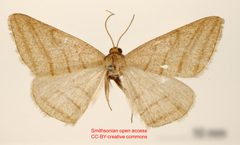
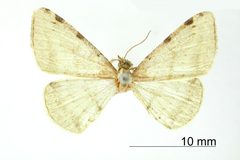
4Taeniogramma is a of geometer moths in the Geometridae, established by Paul Dognin in 1914. The genus contains approximately ten described distributed across the Americas, with the highest diversity in Central and South America and several species extending into the southwestern United States. Species in this genus are characterized by their patterned forewings, often featuring distinct lines or bands.
Pronunciation
How to pronounce Taeniogramma: /ˌtiːniəˈɡræmə/
These audio files are automatically generated. While they are not always 100% accurate, they are a good starting point.
Identification
Taeniogramma can be recognized by forewing patterns that typically include longitudinal lines or bands, often with four to eight distinct stripes. The specific epithets of described species frequently reference these patterns (octolineata = eight-lined, quadrilinea = four-lined, lineata = lined). Distinguishing individual species requires examination of wing pattern details, including the number, spacing, and intensity of dark longitudinal markings.
Images
Distribution
occur from the southwestern United States (Arizona, New Mexico, Texas, southern California) through Mexico and Central America (Guatemala, Rica, Panama) to South America (Colombia, Ecuador, Brazil).