
Numia terebintharia
Guenée, [1858]
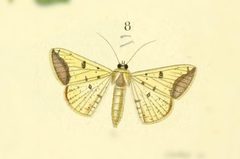
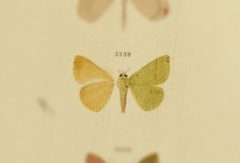
A Neotropical geometrid in the Ennominae, first recorded in Brazil from the Caatinga region in 2021. are small green moths with approximately 2.5 cm wingspan; females possess an spot on the forewings. The was previously known from the Caribbean, Florida (USA), Haiti, and Rica. Caterpillars are external leaf-feeders that can cause extensive defoliation of plants.
Pronunciation
How to pronounce Numia terebintharia: /ˈnuː.mi.a ˌtɛr.ɛ.bɪnˈθɛː.ri.a/
These audio files are automatically generated. While they are not always 100% accurate, they are a good starting point.
Identification
: approximately 2.5 cm wingspan, green wings. Females distinguished by spot on (fore) wings and ; males have bipectinate antennae and lack the apical spot. Ennominae (inchworm ) with characteristic caterpillar : two pairs of false abdominal legs ( restricted to terminal segments).
Images
Habitat
Xerophilous deciduous Caatinga vegetation in hot semi-arid climates (BSh Köppen classification). Associated with evergreen trees within this seasonally dry tropical forest .
Distribution
Brazil: first recorded in Paraíba state, Sertão region, municipality of Santa Terezinha (7°1'30.3''S, 37°24'22.5''W). Previously recorded from Haiti (type locality), Caribbean, Florida (USA), and Rica. The Numia is strictly Neotropical, ranging from the southern United States and Caribbean to Argentina.
Diet
Leaves of Ziziphus joazeiro (Rhamnaceae). Caterpillars feed externally, scraping the leaf and removing portions of the leaf blade from the edge.
Host Associations
- Ziziphus joazeiro Mart. - primary plantRhamnaceae; first recorded for this . External feeding on young and mature leaves.
Life Cycle
Complete : caterpillar (inchworm type with two pairs of false abdominal legs) → obtect pupa → . Laboratory rearing successfully conducted at room temperature using Ziziphus joazeiro leaves as food source.
Behavior
Caterpillars are free-feeding external herbivores that produce by scraping leaf . High herbivory intensity observed: some individual trees sustained approximately 90% leaf injury, with attacked leaves drying to straw-yellow and retaining only .
Ecological Role
Herbivore and potential defoliator of evergreen trees in deciduous Caatinga forests. May function as a significant folivore in this seasonally dry where evergreen plants provide critical resources during dry periods.
Human Relevance
Documented as a pest-level defoliator of Ziziphus joazeiro, an evergreen tree in Brazil's Caatinga region. The extent of leaf damage (up to 90% on some trees) suggests potential economic or ecological significance if expand.
Similar Taxa
- Other Numia speciesSame ; Numia is strictly Neotropical and may overlap in range. Identification requires examination of wing pattern (female spot), structure, and male genitalia.
- Other Ennominae in Caberini tribeRelated geometrids with similar associations; some recorded on Rhamnaceae. Differentiation requires morphological examination.