
Numia
Guenée, [1858]
Species Guides
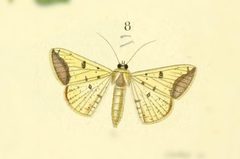
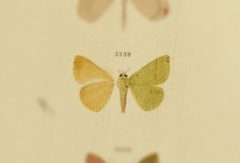
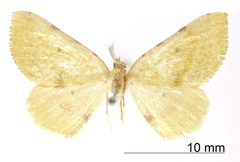
1Numia is a strictly Neotropical of geometer moths (Geometridae: Ennominae). The genus contains at least one well-documented , N. terebintharia Guenée, which has been recorded from the Caribbean, Florida, Rica, and northeastern Brazil. Caterpillars are inchworm-type with two pairs of false abdominal legs and feed externally on leaves of Ziziphus species (Rhamnaceae). are small with wingspans around 2.5 cm; females possess a large variable spot on the forewings, while males have bipectinate and females have antennae.
Pronunciation
How to pronounce Numia: //ˈnuː.mi.a//
These audio files are automatically generated. While they are not always 100% accurate, they are a good starting point.
Identification
: small with wingspan approximately 2.5 cm; wings predominantly green. Females distinguished by large spot on wings (variable in expression); males distinguished by bipectinate versus antennae in females. Caterpillars: inchworm-type with two pairs of false abdominal legs. Pupae: obtect.
Images
Habitat
Xerophilous deciduous Caatinga vegetation in northeastern Brazil; hot semi-arid climate (Köppen BSh). Caribbean and Florida occur in subtropical to tropical dry forest .
Distribution
Strictly Neotropical: southern United States (Florida), Caribbean (Haiti, type locality of N. terebintharia), Central America ( Rica), and South America (Brazil: Paraíba state, first record in 2021).
Seasonality
Field observations of caterpillars in Brazil recorded February–March, corresponding to the beginning of the rainy season in the Caatinga region.
Diet
External leaf feeding on Rhamnaceae: Ziziphus joazeiro in Brazil; Ziziphus guatemalensis in Rica (literature record). Feeding type involves free feeding, removing portions of leaf blade from the edge and scraping .
Host Associations
- Ziziphus joazeiro Mart. - herbivoreFirst recorded in Brazil; evergreen tree in Caatinga vegetation
- Ziziphus guatemalensis Hemsl. - herbivoreRecorded in Rica by Janzen and Hallwachs (2001)
Life Cycle
Caterpillar (inchworm-type with two pairs of false abdominal legs) → pupa (obtect) → . Laboratory rearing successful at room temperature on Z. joazeiro leaves.
Behavior
High-intensity herbivory: some individual trees showed approximately 90% of leaves with feeding injuries. Feeding damage produces dry, straw-yellow ; in heavily attacked leaves, only remain.
Ecological Role
Folivorous herbivore in dry tropical and subtropical forest . Capable of causing substantial defoliation of evergreen trees within deciduous forest formations.