
Tornos scolopacinaria
(Guenée, [1858])
dimorphic gray
Tornos scolopacinaria, commonly known as the dimorphic gray, is a geometrid in North America. The species exhibits pronounced in wing coloration, with males grayish-brown and females yellowish-gray. It has a broad season spanning most of the year and has been recorded using aster and tickseed plants as larval .
Pronunciation
How to pronounce Tornos scolopacinaria: //ˈtɔrnɒs skəˌloʊpəsɪˈnɛəriə//
These audio files are automatically generated. While they are not always 100% accurate, they are a good starting point.
Identification
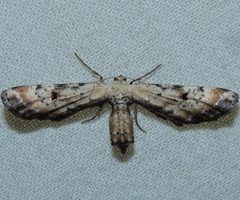
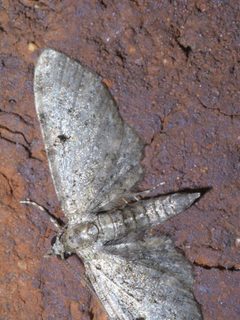
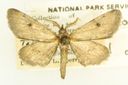
in wing color is the primary distinguishing feature: males are grayish-brown, females yellowish-gray with dark margins. The checkered fringe is present in both sexes. The larger discal spot in females may aid separation. Hodges number 6486.
Images
Appearance
Small geometrid with wingspan 2.1–2.9 cm. Males have grayish-brown wings with a dark round discal spot on the forewing. Females have yellowish-gray wings with dark gray outer margins and a larger dark forewing discal spot than males. Both sexes possess a checkered fringe on the wings.
Distribution
North America
Seasonality
fly from February to November, indicating a broad activity period across seasons.
Diet
Larvae feed on of aster (Asteraceae) and tickseed (Coreopsis, Asteraceae). diet not specified.
Host Associations
- Aster - larval of aster used as plants
- Coreopsis - larval tickseed plants used as
Similar Taxa
- Other Tornos speciescongeneric may share similar wing patterns and size; and specific wing coloration help distinguish T. scolopacinaria
More Details
Subspecies
Three recognized: T. s. forsythae Rindge, 1954; T. s. scolopacinaria; and T. s. spodius Rindge, 1954.