
Epimecis hortaria
(Fabricius, 1794)
tulip-tree beauty
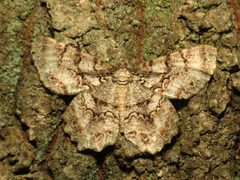
Epimecis hortaria, commonly known as the tulip-tree beauty, is a native to North America. It is one of the larger in its , with a wingspan reaching 43–55 mm. The species exhibits two distinct color morphs and has a broad season spanning early spring through autumn.
Pronunciation
How to pronounce Epimecis hortaria: /ˌɛpɪˈmiːsɪs hɔːrˈtɛəriə/
These audio files are automatically generated. While they are not always 100% accurate, they are a good starting point.
Identification
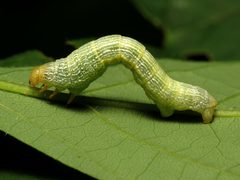
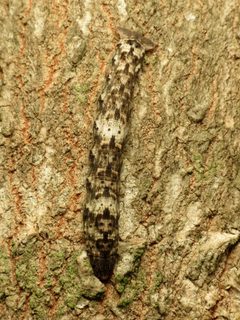
Distinguished from similar geometer moths by its relatively large size (43–55 mm wingspan) and the presence of two distinct color morphs. The Dendraria form shows broader and subterminal wing lines, while the Carbonaria form is noticeably darker with white edging. The caterpillar's swollen third thoracic segment and orange are diagnostic features.
Images
Habitat
Associated with deciduous forests and woodlands containing plants, particularly areas with tulip trees (Liriodendron tulipifera) and other preferred larval food plants.
Distribution
North America: throughout New England south to Florida, west to Texas and Missouri. GBIF records also indicate presence in Europe and Northern Asia (excluding China), though this may represent introduced or data artifacts.
Seasonality
active from late March to early October. activity pattern.
Diet
Larvae feed on Magnolia, Asimina (pawpaw), Populus (poplar/cottonwood), Sassafras, and Liriodendron (tulip tree). feeding habits not documented in available sources.
Host Associations
- Magnolia - larval food plant
- Asimina - larval food plant
- Populus - larval food plant
- Sassafras - larval food plant
- Liriodendron - larval food planttulip tree, source of
Life Cycle
Complete with , larval, pupal, and stages. Specific timing of stages not documented.
Behavior
are and attracted to artificial light sources.
Ecological Role
Larvae function as herbivores on several tree . Specific ecological relationships beyond herbivory not documented.
Human Relevance
Attracted to lights, bringing it into contact with human observers. No documented economic or agricultural significance.
Similar Taxa
- Other Epimecis speciesSame , requiring careful examination of wing pattern and size for separation
- Other large Ennominae geometer mothsSimilar size range; E. hortaria distinguished by specific wing pattern elements and presence of two color morphs
More Details
Color polymorphism
The existence of two distinct forms (Dendraria and Carbonaria) within this is notable and may represent genetic or geographic variation.
Taxonomic history
First described by Johan Christian Fabricius in 1794, making it one of the earlier described North American geometrid moths.