
Lytrosis unitaria
(Herrich-Schäffer, [1854])
Common Lytrosis Moth
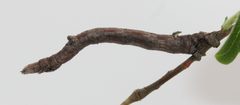
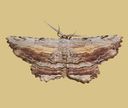
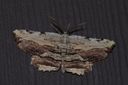
Lytrosis unitaria, the common lytrosis , is a geometrid moth native to eastern and central North America. have a wingspan of approximately 50 mm. The larvae are , feeding on a range of woody plants including roses, hawthorns, serviceberries, maples, oaks, and viburnums. The species is well-documented across its range with over 3,000 citizen science observations.
Pronunciation
How to pronounce Lytrosis unitaria: //lɪˈtroʊ.sɪs juːˈnɪ.tɛr.i.ə//
These audio files are automatically generated. While they are not always 100% accurate, they are a good starting point.
Identification
Distinguished from other Lytrosis and similar geometrid moths by combination of size (wingspan ~50 mm), geographic distribution in eastern North America, and association with specific larval plants. Precise diagnostic features for field identification require additional sources.
Images
Appearance
wingspan approximately 50 mm (2.0 in). As a member of Geometridae, adults possess the characteristic broad, relatively flat wings and slender body typical of the . Specific coloration and pattern details are not provided in available sources.
Habitat
Found in regions supporting its larval plants: Rosa, Crataegus, Amelanchier, Acer, Quercus, and Viburnum . These include deciduous woodlands, forest edges, shrublands, and areas with mixed woody vegetation.
Distribution
Eastern and central North America. Documented in: Arkansas, Georgia, Iowa, Massachusetts, New Hampshire, New Jersey, New York, North Carolina, Ohio, Oklahoma, Ontario (Canada), Pennsylvania, South Carolina, Tennessee, Texas, Vermont, Virginia, West Virginia, and Wisconsin.
Diet
Larvae feed on leaves of multiple woody plant : Rosa (roses), Crataegus (hawthorns), Amelanchier (serviceberries), Acer (maples), Quercus (oaks), and Viburnum (viburnums). feeding habits are not documented in available sources.
Host Associations
- Rosa - larval level
- Crataegus - larval level
- Amelanchier - larval level
- Acer - larval level
- Quercus - larval level
- Viburnum - larval level
Ecological Role
Larval herbivore on woody plants; contributes to nutrient cycling and serves as prey for and . Specific ecological impacts are not documented.
Similar Taxa
- Other Lytrosis speciesCongeneric may overlap in range and require detailed examination for separation; L. unitaria is the most commonly encountered species in the based on observation frequency.
- Other Geometridae in Ennominae members share general body plan and wing posture; plant associations and geographic range help narrow identification.
More Details
Taxonomic History
Originally described as Boarmia unitaria by Herrich-Schäffer in 1854; later transferred to Lytrosis.
Observation Frequency
Over 3,300 observations recorded on iNaturalist, indicating it is frequently encountered and relatively conspicuous within its range.