
Lytrosis
Hulst, 1896
Species Guides
4- Lytrosis heitzmanorum
- Lytrosis permagnaria(charcoal lytrosis)
- Lytrosis sinuosa(sinuous lytrosis moth)
- Lytrosis unitaria(Common Lytrosis Moth)
Lytrosis is a of in the Geometridae, established by George Duryea Hulst in 1896. The genus comprises four described distributed in North America. It belongs to the Ennominae, a diverse group of geometrid moths often characterized by their broad, somewhat triangular wings at rest.
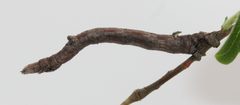
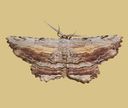
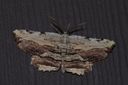
Pronunciation
How to pronounce Lytrosis: //laɪˈtroʊ.sɪs//
These audio files are automatically generated. While they are not always 100% accurate, they are a good starting point.
Identification
Identification to level requires examination of genitalia and wing pattern characteristics. The four (L. heitzmanorum, L. permagnaria, L. sinuosa, L. unitaria) differ in wing pattern details and geographic distribution. L. permagnaria and L. unitaria were described in the 19th century, while L. heitzmanorum and L. sinuosa were described by Rindge in 1971, suggesting these latter species may be more recently distinguished cryptic or localized forms.
Images
Distribution
North America; confirmed records from Vermont and other United States locations.
Similar Taxa
- Other Ennominae generaLytrosis share the broad-winged resting posture and general body plan common to many Ennominae. Specific differentiation requires detailed morphological examination, particularly of male genitalia structures.
More Details
Taxonomic history
The was established relatively late (1896) compared to many Geometridae genera, with two of its four not described until 1971 by Rindge, indicating ongoing refinement of species boundaries within this group.
Observation frequency
The has accumulated over 3,500 observations on iNaturalist, suggesting it is encountered with moderate frequency by naturalists, though individual may vary in detectability.