
Euchlaena mollisaria
(Hulst, 1886)
Euchlaena mollisaria is a geometrid found in western North America. are medium-sized with a wingspan of approximately 46 mm. The species is active from late spring through early autumn. It is attracted to artificial light sources.
Pronunciation
How to pronounce Euchlaena mollisaria: /juːˈkleɪ.nə ˌmɒlɪˈsɛərɪə/
These audio files are automatically generated. While they are not always 100% accurate, they are a good starting point.
Identification
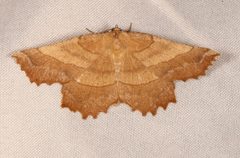
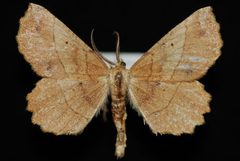
Distinguished from similar Euchlaena by the combination of clay fawn ground color, lighter wing area, scattered dark fawn striations, and a whitish spot. The specific pattern of striations and the apical spot are key field marks. Separation from other western North American Euchlaena species requires examination of wing pattern details.
Images
Habitat
Specific preferences are not documented. Based on distribution records, the occurs in varied western North American environments from montane regions to lower elevations.
Distribution
Western North America: recorded from southern California east to Colorado, and north to Montana and British Columbia.
Seasonality
active from May to September.
Behavior
are attracted to artificial light sources. activity.
Human Relevance
Documented through citizen science efforts including National Week events and bioblitz surveys. Attracted to porch lights and blacklights, making it accessible for amateur observation.
Similar Taxa
- Euchlaena speciesOther members of the share similar overall and coloration; E. mollisaria is distinguished by its specific wing pattern of clay fawn color with lighter area, dark striations, and whitish spot.
More Details
Taxonomic History
Originally described as Endropia mollisaria by Hulst in 1886, later transferred to Euchlaena.
Observation Data
iNaturalist records 47 observations of this as of data compilation date.