Euchlaena madusaria
(Walker, 1860)
Scrub Euchlaena Moth
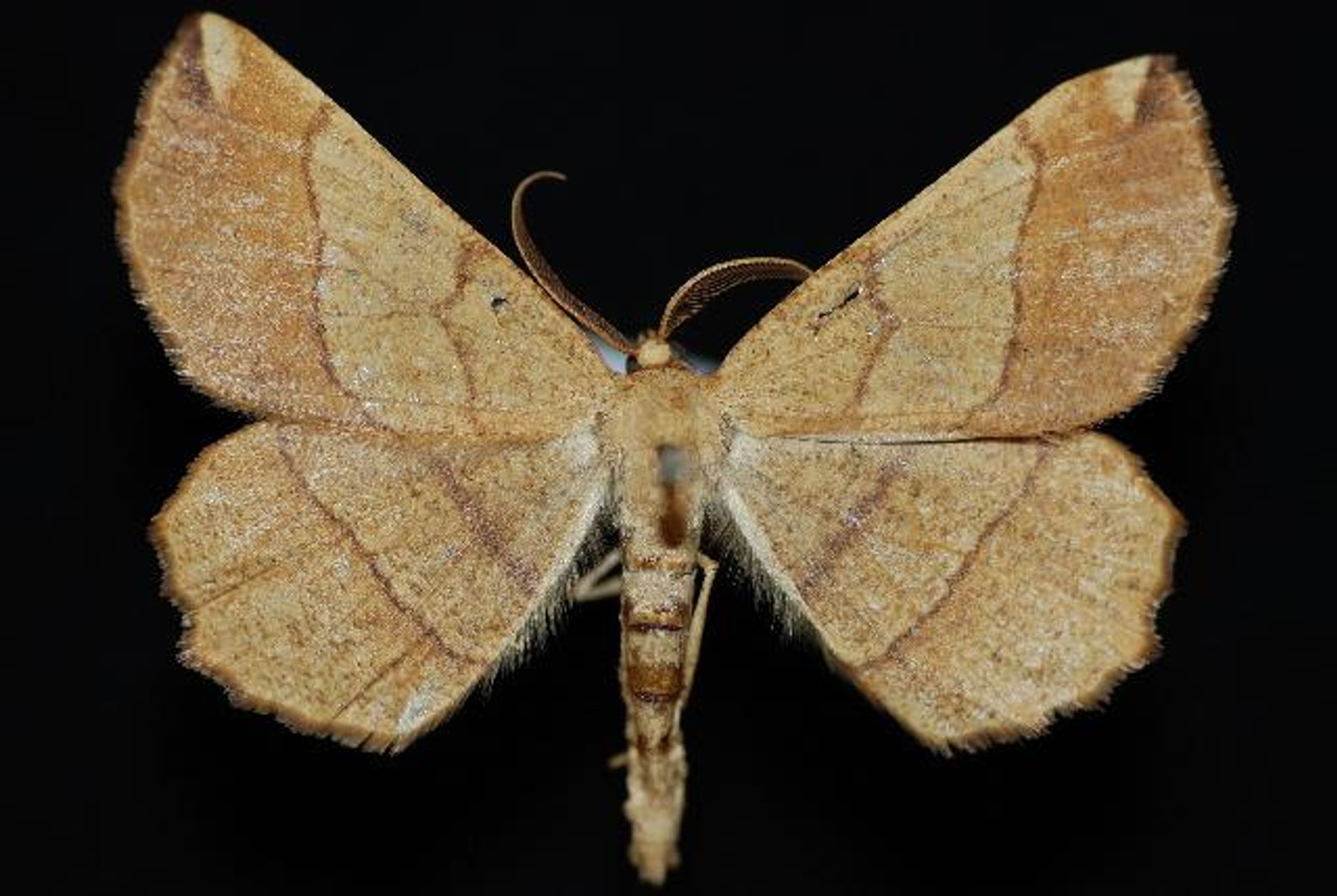
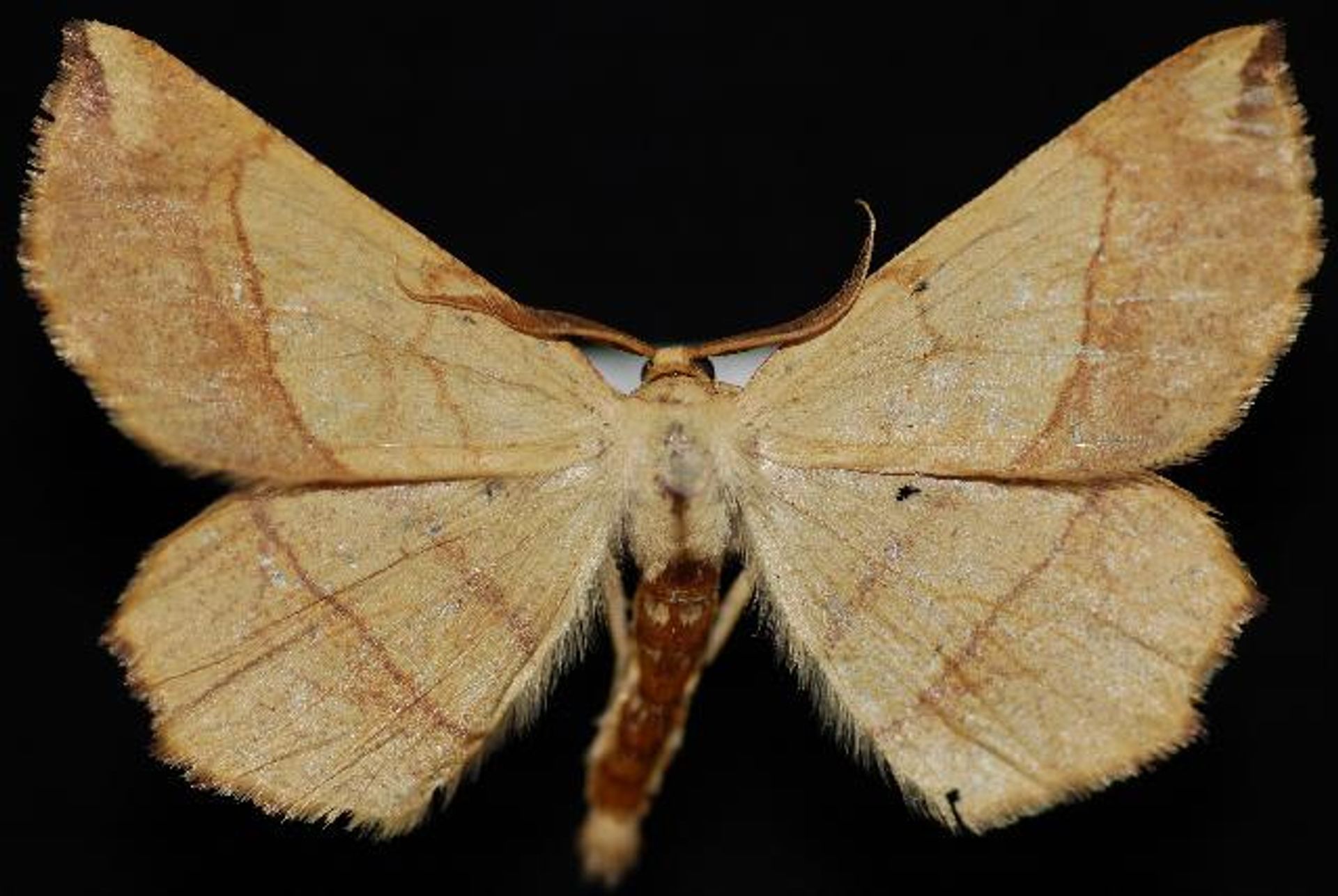
Euchlaena madusaria, commonly known as the scrub euchlaena , is a geometrid moth native to North America. It inhabits dry woodlands across a broad transcontinental range from British Columbia to Nova Scotia and southward to Florida, Missouri, and Oregon. The species has a wingspan of approximately 28 mm and is listed as threatened in Connecticut, indicating conservation concern in parts of its range.
Pronunciation
How to pronounce Euchlaena madusaria: /juːˈkleɪ.nə ˌmɑː.dəˈsɛə.ri.ə/
These audio files are automatically generated. While they are not always 100% accurate, they are a good starting point.
Identification
Distinguished from other Euchlaena by geographic distribution and association with dry woodland . The nominate E. m. madusaria and E. m. ochrearia differ in coloration, with the latter described by McDunnough in 1940. Accurate identification may require examination of genitalia or reference to regional faunal treatments.
Images
Appearance
Small geometrid with a wingspan of approximately 28 mm. As a member of the Euchlaena, it likely exhibits the muted, bark-mimicking coloration typical of the group, though specific pattern details for this are not well documented in available sources.
Habitat
Dry woodlands. The is specifically associated with this type across its North American range.
Distribution
Transcontinental in North America: recorded from British Columbia east to Nova Scotia, south to Florida, Missouri, and Oregon. Additional records from Alberta, Manitoba, and Saskatchewan in Canada.
Seasonality
are mainly on wing from May to August.
Diet
Larvae feed on various trees, including oak (Quercus) and blueberry (Vaccinium).
Host Associations
- Quercus - larval foodplantoak
- Vaccinium - larval foodplantblueberry
Behavior
are attracted to light. activity occurs during the summer months.
Human Relevance
Listed as threatened in Connecticut, indicating regional conservation concern. Otherwise, no significant documented interactions with humans.
Similar Taxa
- Euchlaena serrataSimilar size and preferences; requires careful examination for differentiation
- Other Euchlaena species-level similarity in appearance and ; precise identification often requires dissection or molecular analysis
More Details
Subspecies
Two recognized: Euchlaena madusaria madusaria (nominate) and Euchlaena madusaria ochrearia McDunnough, 1940.
Conservation Status
The is listed as threatened in Connecticut, though it appears secure across much of its broader North American range.