Leucobrephos brephoides
(Walker, 1857)
Scarce Infant Moth
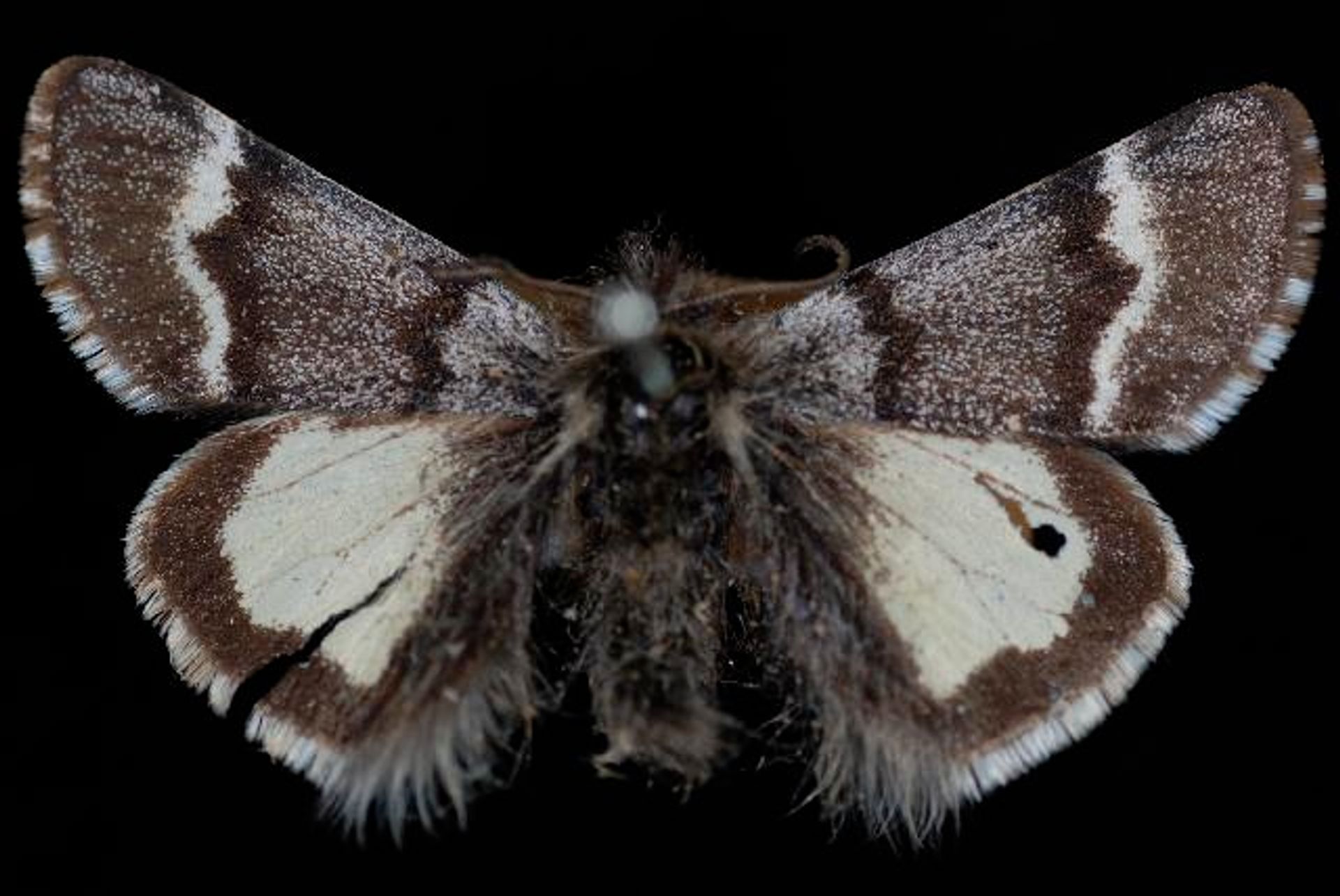
Leucobrephos brephoides is a small geometrid known as the scarce infant moth. It is one of the earliest moths to appear in spring, with active from March through May. The is restricted to North American and montane forests, where its larvae feed on several deciduous tree species including aspen and birch.
Pronunciation
How to pronounce Leucobrephos brephoides: /ˌljuːkoʊˈbrɛfoʊs ˌbrɛˈfoʊ.aɪdiːz/
These audio files are automatically generated. While they are not always 100% accurate, they are a good starting point.
Identification
The scarce infant can be distinguished from other early-spring geometrids by its specific period (March–May, peaking mid-to-late April in Alberta) and its association with mixed-wood forests. The Leucobrephos is separated from related Archiearinae genera by morphological characters not detailed in general sources; precise identification may require examination of genitalia or reference to regional keys.
Images
Appearance
have a wingspan of approximately 29 mm. The exhibits the typical wing shape and body form of the Archiearinae, with relatively broad wings and a compact body. Coloration and pattern details are not explicitly documented in available sources.
Habitat
Open mixed-wood forests of the and mountain regions. The consists of forested areas with a mixture of deciduous and coniferous trees, particularly those supporting the larval plants.
Distribution
North America, ranging from Yukon to Labrador and south to New York, with southern extensions into southern Alberta and southern British Columbia. Records confirmed from Alberta, Manitoba, and Saskatchewan in Canada.
Seasonality
are on wing from March to May, with peak activity in mid to late April in Alberta. This early spring is notable among North American .
Diet
Larvae feed on Populus tremuloides (quaking aspen), Betula papyrifera (paper birch), and Alnus (alders). Additional recorded include Salix (willows) and Populus balsamifera (balsam poplar). feeding habits are not documented.
Host Associations
- Populus tremuloides - larval primary
- Betula papyrifera - larval primary
- Alnus - larval -level record
- Salix - larval additional recorded
- Populus balsamifera - larval additional recorded
Life Cycle
Larval stage feeds on tree foliage. Specific details regarding deposition, , or stage are not documented in available sources. The early spring period suggests larvae may feed in late spring to summer, with pupation and overwintering occurring prior to adult .
Behavior
are active during early spring, often before most vegetation has leafed out. This timing is characteristic of the Archiearinae, whose members are among the first to fly each year.
Ecological Role
Larvae function as folivores on deciduous trees in and montane forest . Their role in nutrient cycling and as a food source for has not been quantified.
Human Relevance
No significant documented economic or cultural importance. The 'scarce infant ' reflects its relative rarity in collections and observations rather than any conservation status designation.
Similar Taxa
- Other Archiearinae speciesShare early spring period and forest distribution; require detailed morphological examination for separation
- Biston betulariaOverlaps in some range and but has different period (typically later spring/summer) and different larval
More Details
Taxonomic note
Originally described by Francis Walker in 1857 as Anarta brephoides, later transferred to Leucobrephos. The genus contains few and is restricted to the Holarctic region.
Observation frequency
iNaturalist records indicate approximately 70 observations, suggesting the is genuinely uncommon or underreported, consistent with its .