Tachystola
Meyrick, 1914
Species Guides
1Tachystola is a of concealer moths (Oecophoridae) comprising approximately 15 native to Australasia, with Australia as the center of diversity. The genus has established in New Zealand, the United States, and Europe through human-mediated introduction. One species, Tachystola acroxantha, has been particularly successful in the UK following its first recorded appearance in 1908, spreading significantly since the 1990s. The genus is characterized by distinctive wing patterns and has been the subject of genomic study as part of the Darwin Tree of Life project.
Pronunciation
How to pronounce Tachystola: //ˌtækɪˈstoʊlə//
These audio files are automatically generated. While they are not always 100% accurate, they are a good starting point.
Identification
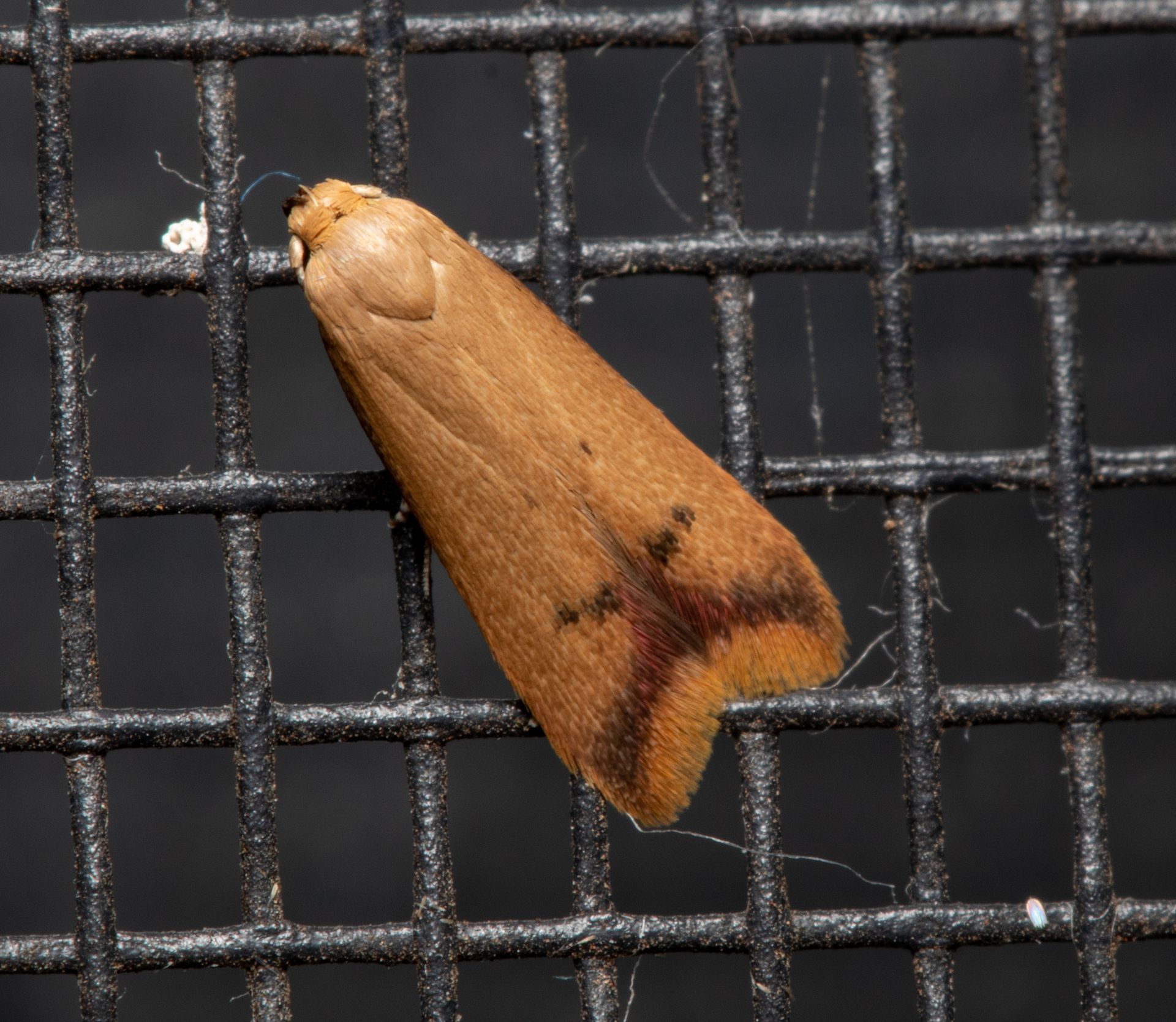
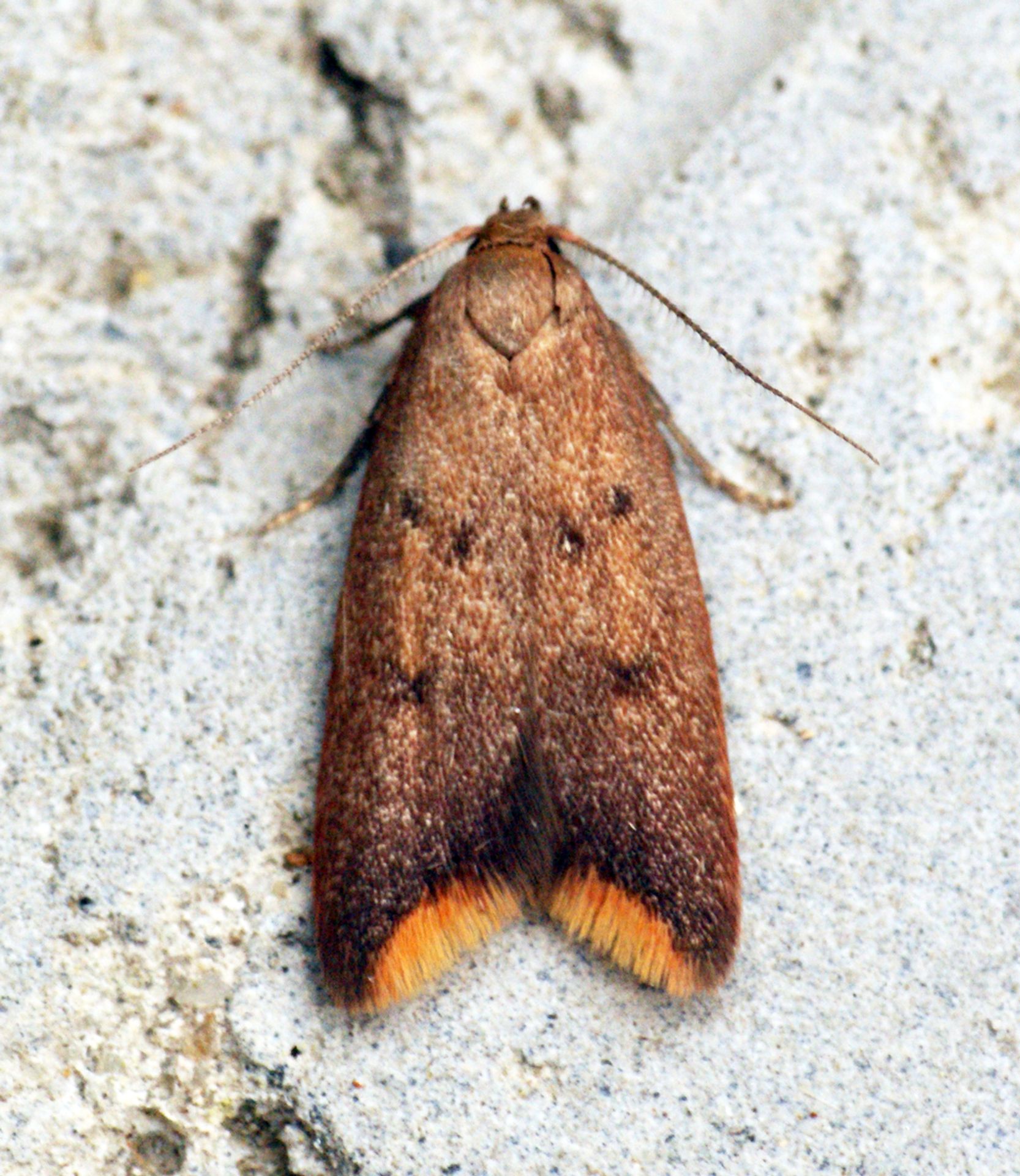
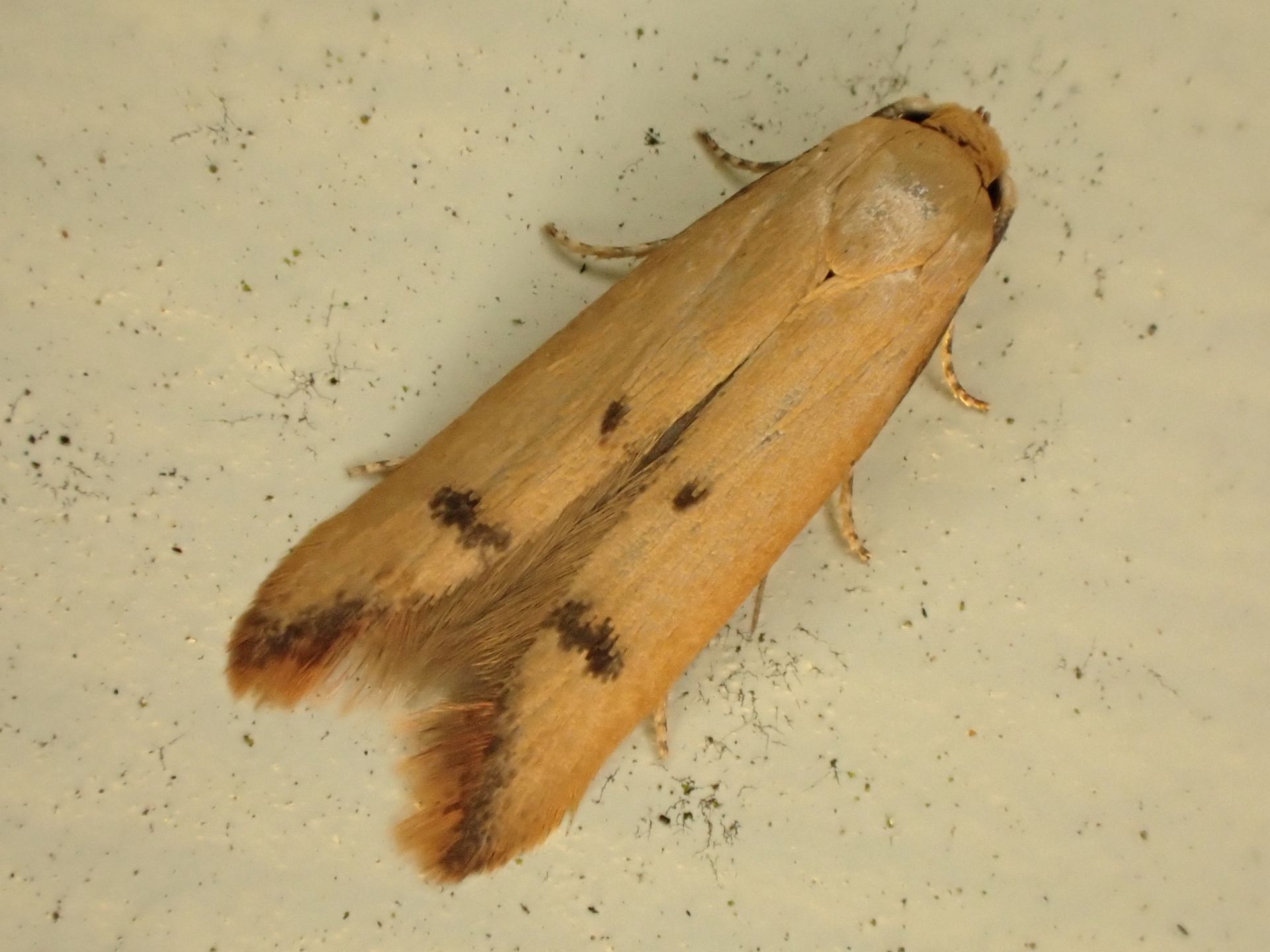
of at least one (Tachystola acroxantha) are distinguished by brown or purplish wings bearing three dark spots and a bright yellow fringe of hairs along the outer margin of the forewings. This combination of coloration and spotting pattern distinguishes it from other Oecophoridae in regions where it occurs.
Images
Habitat
Decaying leaf litter; possibly organic detritus inside houses. Based on limited observations of larval feeding .
Distribution
Native to southern Australia; in New Zealand, United States, and Europe. In the United Kingdom, first recorded from the south coast of England in 1908, now common around Oxford, Reading, Birmingham, and Leicester, with scattered records from Wales, Northern Ireland, Cheshire, Devon, and Essex.
Diet
Decaying leaf litter; possibly organic detritus inside houses.
Behavior
are readily attracted to light. The spread of Tachystola acroxantha in Britain since the 1990s has been possibly facilitated by milder winters or genetic ; the disjointed geographic distribution suggests human-aided rather than natural range expansion.
Human Relevance
Tachystola acroxantha has become a well-established non-native in the UK, with expansion documented since the 1990s. The species was selected for whole- sequencing as part of the Darwin Tree of Life project, producing a 388.1 Mb genome assembly with 12,656 protein-coding genes annotated.