
Coleotechnites quercivorella
(Chambers, 1872)
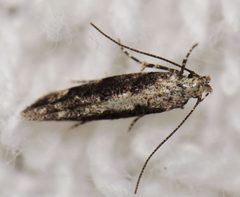
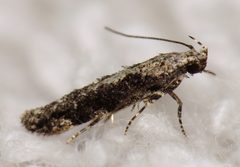
Coleotechnites quercivorella is a small gelechiid native to North America. have a wingspan of approximately 11 mm. The is widely distributed across Canada and the United States, with records spanning from British Columbia and Alberta to the Atlantic coast and south to Texas and California. Larvae are specialized feeders on oak (Quercus) species.
Pronunciation
How to pronounce Coleotechnites quercivorella: /ˌkɒlɪoʊtɛkˈnaɪtiːz ˌkwɜːrsɪvɔːˈrɛlə/
These audio files are automatically generated. While they are not always 100% accurate, they are a good starting point.
Identification
The small size (11 mm wingspan) and association with oak may aid identification. Distinguishing C. quercivorella from other Coleotechnites requires examination of genitalia or detailed wing pattern analysis. The specific epithet 'quercivorella' (meaning 'oak-eating') references the larval host association, which may help separate it from with different host preferences.
Images
Appearance
A small with a wingspan of approximately 11 mm. Specific coloration and pattern details of are not well documented in available sources. As a member of the Gelechiidae , adults likely have narrow, pointed forewings typical of the group. Larval has not been described in detail.
Habitat
Associated with oak-dominated including deciduous forests, woodlands, and urban areas where Quercus are present. Specific habitat requirements beyond plant presence have not been documented.
Distribution
North America. Recorded from Canada: Alberta, British Columbia, Manitoba, New Brunswick, Ontario, Quebec. United States: Alabama, California, Illinois, Kentucky, Maine, Maryland, Massachusetts, Minnesota, New Hampshire, New Jersey, North Dakota, Ohio, Oklahoma, Pennsylvania, South Carolina, Tennessee, Texas, West Virginia.
Seasonality
Specific period has not been documented. As a temperate-zone gelechiid, adults likely fly during spring and summer months, but this has not been confirmed.
Diet
Larvae feed on Quercus (oaks). feeding habits are unknown.
Host Associations
- Quercus - larval food plant-level association; specific oak used have not been documented.
Life Cycle
Complete with , larva, pupa, and stages. Specific details of timing, stage, and larval development have not been documented.
Ecological Role
Larval herbivore on oaks. Specific ecological impacts have not been studied.
Human Relevance
No documented economic or cultural significance. Not considered a pest .
Similar Taxa
- Other Coleotechnites speciesMany are small gelechiids with similar ; identification requires detailed examination of genitalia or association data.
- Other GelechiidaeSmall size and narrow wings are shared with numerous members; specificity and geographic range help narrow identification.
More Details
Etymology
The specific epithet 'quercivorella' derives from Latin 'quercus' (oak) and 'voro' (to devour), referencing the larval diet.