
Agnippe leuconota
(Zeller, 1873)
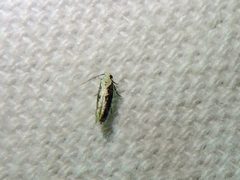
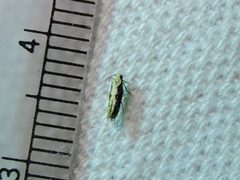
Agnippe leuconota is a small gelechiid described by Zeller in 1873. It occurs across a broad geographic range in North America, from the northeastern United States through the Midwest, south to Florida and Texas, and into Mexico. The is most reliably distinguished from its Agnippe prunifoliella by differences in forewing pattern, particularly the absence of distinct white costal markings present in the latter species. are active during late spring and summer.
Pronunciation
How to pronounce Agnippe leuconota: /æɡˈnɪp.i ˌluː.kəˈnoʊ.tə/
These audio files are automatically generated. While they are not always 100% accurate, they are a good starting point.
Identification
resemble Agnippe prunifoliella but differ in forewing pattern: leuconota lacks the small white spot at the base of the , the distinct white costal spot before the cilia, and the white streak in the apex that are all present in prunifoliella. Additionally, prunifoliella shows three large almost triangular white projections from the margin into the brown area, whereas leuconota has only three scarcely perceptible emarginations in this region.
Images
Distribution
North America: recorded from Illinois, Maine, Florida, Texas, and Mexico.
Seasonality
on wing from May to August.
Similar Taxa
- Agnippe prunifoliellaSimilar appearance; distinguished by forewing pattern differences including presence of white costal spots and streaks in prunifoliella versus their absence in leuconota, and different margin markings.
More Details
Original description
Originally described as Gelechia leuconota by Zeller in 1873.