
Agnippe
Chambers, 1872
Species Guides
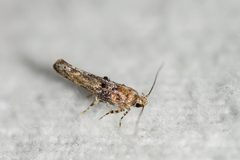
5Agnippe is a of small in the Gelechiidae, first described by Chambers in 1872. The genus contains approximately 25 described distributed primarily across the Palearctic and Nearctic regions. Species in this genus are generally small with narrow wings and are associated with various plants. The genus was revised by Bidzilya & Li in 2010, which clarified species boundaries and described several new from Central Asia and China.
Pronunciation
How to pronounce Agnippe: /æɡˈnɪ.peɪ/
These audio files are automatically generated. While they are not always 100% accurate, they are a good starting point.
Identification
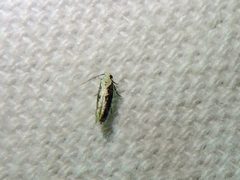
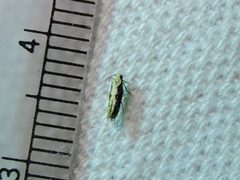
Agnippe are small gelechiid moths with forewings typically 4–7 mm in length. They can be distinguished from related by genitalia characteristics, particularly the male valvae and female signa, as detailed in Bidzilya & Li (2010). Many species exhibit subtle wing pattern variations involving pale markings or bicolored forewings. Accurate identification to species level generally requires dissection and reference to the 2010 revision.
Images
Habitat
occur in diverse including desert regions, steppe, and temperate woodlands. Several Central Asian species (A. deserta, A. turanica) are associated with arid environments. North American species such as A. prunifoliella inhabit areas with Rosaceae plants.
Distribution
Palearctic region (Europe, Central Asia, China, Japan) and Nearctic region (North America). Specific distribution records include Vermont and other parts of the United States, as well as extensive records across Eurasia.
Diet
Larvae of at least some feed on living plant tissue. Agnippe prunifoliella larvae mine leaves of Prunus species (Rosaceae). associations for many species remain undocumented.
Host Associations
- Prunus - larval food plantA. prunifoliella
Ecological Role
As leaf-mining larvae, some contribute to herbivore pressure on woody plants in the Rosaceae . Their role in broader dynamics has not been studied.
Human Relevance
Agnippe prunifoliella is occasionally noted as a minor pest of ornamental and fruit Prunus due to larval leaf mining. No other species have documented economic significance.
Similar Taxa
- GelechiaSimilar size and general appearance, but Agnippe typically have more pronounced pale markings and differ in male genitalia structure (valvae shape and cornuti).
- ChionodesOverlaps in distribution and ; Chionodes often have more contrasting wing patterns and lack the specific genitalic characters (particularly female signum structure) that define Agnippe.
More Details
Taxonomic revision
The 2010 revision by Bidzilya & H.H. Li (European Journal of Entomology 107: 247–265) is the definitive modern treatment, describing 6 new and providing keys, illustrations, and distribution maps for all Palearctic species.
Etymology
The name Agnippe is of unclear etymology; Chambers did not provide an explicit derivation in his 1872 description.