
Symmetrischema pallidochrella
(Chambers, 1872)
Symmetrischema pallidochrella is a small gelechiid described by Vactor Tousey Chambers in 1872. The is native to North America, with confirmed records from Kentucky, Illinois, Ohio, and Oklahoma. A single specimen was detected in the United Kingdom in 2019, likely transported via international shipping or plant material.
Pronunciation
How to pronounce Symmetrischema pallidochrella: /sɪmɛtrɪˈskiːmə pælɪdɒkˈrɛlə/
These audio files are automatically generated. While they are not always 100% accurate, they are a good starting point.
Identification
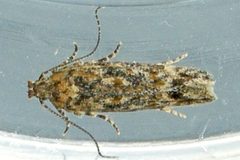
Distinguished from by the combination of: pale ocherous forewing base with sparse fuscous dusting, a distinct fuscous transverse line near the base, and an oblique fuscous streak running to the fold at one-fourth. The densely dusted area with dark ocherous and fuscous tones separates it from paler Symmetrischema . Accurate identification requires examination of genitalia or reference to original description.
Images
Distribution
Native to North America: recorded from Kentucky, Illinois, Ohio, and Oklahoma. Introduced to United Kingdom (single record from Felixstowe, Suffolk, June 2019).
Seasonality
recorded in June (UK record); North American insufficiently documented.
Human Relevance
One record of accidental introduction to UK via international trade routes, detected at bird observatory (likely via imported goods or plant material). No established economic or ecological impact documented.
Similar Taxa
- Symmetrischema costaricenseSimilar wing pattern but lacks the distinct basal fuscous line and oblique streak to fold; distribution differs (Neotropical versus Nearctic)
- Symmetrischema tangoliasLarger with more uniform dark coloration; important agricultural pest on potato and tomato with different wing pattern
More Details
Nomenclature
Originally described as Depressaria pallidochrella Chambers, 1872; transferred to Symmetrischema by subsequent authors. The Symmetrischema belongs to tribe Gnorimoschemini within Gelechiinae.
Detection history
The UK record from Landguard Bird Observatory in June 2019 represents the only documented occurrence outside native range, highlighting importance of surveillance at ports and observatories for detecting non-native Lepidoptera.