
Neodactylota egena
Hodges, 1966
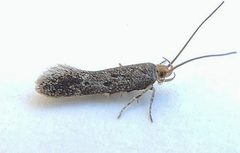
Neodactylota egena is a small gelechiid described by Ronald W. Hodges in 1966. It is known from limited records in the southwestern United States, specifically California and Arizona. The is characterized by its modest size and relatively plain gray-brown forewings with subtle discal markings.
Pronunciation
How to pronounce Neodactylota egena: //niː.oʊˌdæk.tɪˈloʊ.tə ˈɛ.dʒə.nə//
These audio files are automatically generated. While they are not always 100% accurate, they are a good starting point.
Identification
Distinguished from similar gelechiid moths by combination of small size (10.5 mm wingspan), nearly uniform gray-brown forewing coloration with weakly contrasting brown discal marks, and pale bases. Specific separation from requires examination of genitalia or other subtle characters not described in available sources.
Images
Appearance
Small with wingspan approximately 10.5 mm. Forewings nearly uniform gray-brown with pale bases; discal markings brown, weakly contrasting with background coloration. Hindwings fuscous (dusky brownish-gray).
Distribution
Known from California and Arizona, United States. Records indicate southwestern North American distribution, though precise preferences remain undocumented.
Similar Taxa
- Other Neodactylota species share small size, gray-brown coloration, and gelechiid ; precise identification requires detailed examination
- Unidentified small GelechiidaeMany gelechiid moths exhibit similar plain gray-brown forewings and require dissection or molecular analysis for definitive identification
More Details
Taxonomic history
Described by Ronald W. Hodges in 1966. The Neodactylota was established to accommodate previously placed in related genera, reflecting refined understanding of gelechiid relationships.
Data limitations
Only one iNaturalist observation and sparse literature records exist. plants, larval , and complete remain unknown.