
Helcystogramma hystricella
(Braun, 1921)
Lanceolate Helcystogramma Moth, Lanceolate Moth
A small gelechiid with a wingspan of 13–15 mm, distributed across the eastern and central United States. The name references its larval plant Elymus hystrix (formerly Hystrix patula). Larvae are specialized grass feeders that roll leaves for shelter and .
Pronunciation
How to pronounce Helcystogramma hystricella: /hɛlˌsɪstoʊˈɡræmə hɪˌstrɪˈsɛlə/
These audio files are automatically generated. While they are not always 100% accurate, they are a good starting point.
Identification
Distinguished from by association with plant Elymus hystrix and larval leaf-rolling on grasses. Specific diagnostic morphological features for field identification are not documented in available sources.
Images
Appearance
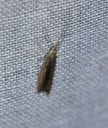
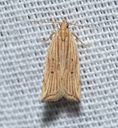
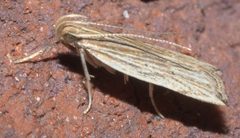
Small with wingspan 13–15 mm.
Habitat
Grassland supporting of the grass Elymus hystrix.
Distribution
United States: Minnesota to Pennsylvania, south to Maryland and Kentucky, west to Oklahoma and Kansas. Additional records from Vermont and Canada.
Diet
Larvae feed on grasses, specifically Elymus hystrix.
Host Associations
- Elymus hystrix - larval plantformerly Hystrix patula; larvae roll leaves of this grass
Life Cycle
Overwinters in the larval stage within a rolled leaf. Complete details of other life stages are not documented.
Behavior
Larvae roll leaves of plant for shelter and .
Ecological Role
Herbivore on native grasses; specific functions are not documented.
More Details
Etymology
The name hystricella derives from the former generic name Hystrix of its plant (now Elymus hystrix).