
Isophrictis rudbeckiella
Bottimer, 1926
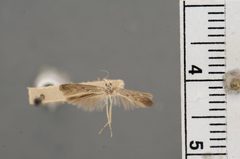
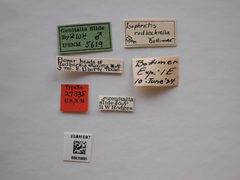
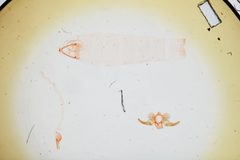
Isophrictis rudbeckiella is a gelechiid described by Bottimer in 1926. It is recorded from the south-central and midwestern United States, with a wingspan of 11.5–16 mm. The is associated with Rudbeckia maxima, on which its larvae develop within flowerheads.
Pronunciation
How to pronounce Isophrictis rudbeckiella: /ˌaɪsɵˈfrɪktɪs rʌdˌbɛkiˈɛlə/
These audio files are automatically generated. While they are not always 100% accurate, they are a good starting point.
Identification
Distinguished from other Isophrictis by the specific pattern of three longitudinal golden streaks on the forewing basal half that converge into a V-shaped golden area before the apex. The combination of white-tipped dark with golden markings is characteristic. Similar gelechiids with streaked forewings lack the distinct V-shaped golden marking.
Images
Appearance
Small with wingspan 11.5–16 mm. Forewings covered with white-tipped dark : fuscous at base, black at apex. Three narrow longitudinal streaks of white-tipped golden scales present—one below , one along fold, one midway between—distinct on basal half, becoming shorter and more numerous beyond middle, forming a V-shaped golden area pointing toward apex. Strong edging of white-tipped black scales at apex. Hindwings dark silvery fuscous.
Habitat
Associated with open supporting Rudbeckia maxima, likely including prairies, meadows, and disturbed grasslands. Specific microhabitat requirements beyond plant presence are not documented.
Distribution
Recorded from Alabama, Iowa, Kansas, Louisiana, Mississippi, Ohio, and Texas in the United States. GBIF records also indicate presence in Alberta, Canada.
Seasonality
active from May to August. Larval development presumably occurs during this period or shortly preceding adult .
Diet
Larvae feed on flowerheads of Rudbeckia maxima. feeding habits are not documented.
Host Associations
- Rudbeckia maxima - larval food plantLarvae feed on flowerheads; occurs within burrow or upper stem
Life Cycle
Larvae develop within flowerheads of Rudbeckia maxima. occurs either within the larval burrow in the flowerhead or in the upper part of the plant stem. emerge from May to August.
Behavior
Larvae are internal feeders within Rudbeckia flowerheads. No other are documented.
Ecological Role
As a herbivore on Rudbeckia maxima, likely contributes to flowerhead damage and seed in . Specific impacts are not quantified.
Human Relevance
No documented economic or agricultural significance. Potential minor impact on ornamental Rudbeckia plantings through flowerhead damage.
Similar Taxa
- Other Isophrictis speciesShare general gelechiid and streaked wing patterns, but differ in specific arrangement and coloration of forewing markings; I. rudbeckiella is distinguished by the V-shaped golden area and three basal streaks
- Other Gelechiidae with streaked forewingsMay resemble general wing pattern, but lack the specific golden streak and V-shaped marking combination; association with Rudbeckia maxima provides additional distinguishing context
More Details
Taxonomic history
Described by Bottimer in 1926; no subsequent taxonomic revisions or synonymy recorded in available sources.
Observation frequency
55 observations recorded on iNaturalist as of source date, suggesting it is infrequently encountered or underreported relative to its range.