
Bryotropha galbanella
(Zeller, 1839)
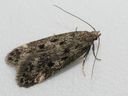
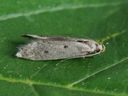
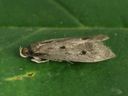
Bryotropha galbanella is a small gelechiid with a broad distribution across northern Europe, extending eastward to Russia and Japan, and westward to Alaska and extreme north-western Canada. The exhibits in wingspan, with males measuring 14–18 mm and females 13–16 mm. Larvae are specialized feeders on mosses, particularly Dicranum scoparium, and construct silken tubes for shelter. The species has been incorrectly recorded from Chile.
Pronunciation
How to pronounce Bryotropha galbanella: /ˌbraɪoʊˈtroʊfə ˌɡælbəˈnɛlə/
These audio files are automatically generated. While they are not always 100% accurate, they are a good starting point.
Identification
The can be distinguished from similar Bryotropha species by its specific wingspan measurements and geographic distribution. Accurate identification typically requires examination of genitalia or molecular analysis. The larval association with Dicranum scoparium moss may aid in detection.
Images
Habitat
Associated with mossy , particularly where the larval Dicranum scoparium occurs. The occupies and temperate regions across its range.
Distribution
Northern and central Europe: Denmark, Norway, Sweden, Finland, Estonia, Latvia, Great Britain, France, the Netherlands, Germany, Poland, Austria, the Czech Republic, Italy, Romania, Russia. Asia: Japan. North America: Alaska and extreme north-western Canada. Incorrectly recorded from Chile.
Seasonality
active from May to August. Larval not documented.
Diet
Larvae feed on Dicranum scoparium (a moss). In captivity, larvae have been reared on Homalothecium lutescens.
Host Associations
- Dicranum scoparium - primary larval moss
- Homalothecium lutescens - secondary (laboratory rearing)moss ; accepted in captivity
Life Cycle
Larvae live in silken tubes constructed on or near their moss. details not documented. emerge in summer.
Behavior
Larvae construct silken tubes for shelter and protection while feeding.
Ecological Role
Larval herbivore on mosses; specific functions not documented.
Human Relevance
No documented economic or medical significance. Occasionally encountered by moss researchers or lepidopterists.
Similar Taxa
- Other Bryotropha speciesSimilar small size and gelechiid ; require detailed examination for separation.
Misconceptions
The was incorrectly recorded from Chile; this record is erroneous.
More Details
Basionym
Originally described as Gelechia galbanella by Zeller in 1839.