
Aristotelia fungivorella
(Clemens, 1864)
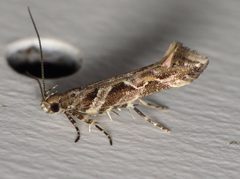
Aristotelia fungivorella is a small gelechiid described by James Brackenridge Clemens in 1864. The has a broad distribution across North America, ranging from Ontario west to British Columbia and south to California, Mississippi, and Alabama. have a wingspan of approximately 11 mm. The larvae develop within galls on willow species Salix cordata and Salix exigua, suggesting a specialized relationship with these plants.
Pronunciation
How to pronounce Aristotelia fungivorella: /ˌærɪstəˈtiːliə ˌfʌndʒɪvɔːˈrɛlə/
These audio files are automatically generated. While they are not always 100% accurate, they are a good starting point.
Identification
Distinguished from other Aristotelia by association with willow galls and geographic range. The specific epithet 'fungivorella' (fungus-eating) may be misleading, as larvae are now known to inhabit willow galls rather than feed directly on fungi. Identification to species level likely requires examination of genitalia or molecular analysis, as is common for microlepidoptera in this .
Images
Habitat
Associated with willow-dominated where plants Salix cordata (sand dune willow) and Salix exigua (coyote willow) occur. These include riparian corridors, sand dunes, and moist lowland areas.
Distribution
North America: Ontario to British Columbia, south to California, Mississippi, and Alabama. Records from Alberta, Canada.
Diet
Larvae develop within galls on Salix cordata and Salix exigua. The exact feeding mechanism is not fully documented—larvae may feed on gall tissue, associated fungi, or other gall inhabitants. The specific epithet suggests historical assumptions of .
Host Associations
- Salix cordata - larval sand dune willow
- Salix exigua - larval coyote willow
Life Cycle
Larval development occurs within galls on willow . have been recorded in July based on blacklight sampling events. Complete details including number of per year and stage are not documented.
Behavior
are attracted to ultraviolet light sources. Larvae are gall-inhabitants, suggesting concealed feeding .
Ecological Role
As a gall-inhabiting , larvae likely function as or within willow galls, potentially interacting with gall-forming insects and associated fungal . The exact ecological relationship remains unclear.
Similar Taxa
- Aristotelia elegantellaAnother small Aristotelia with similar size and preferences; distinguished by plant associations and geographic distribution
- Other Aristotelia speciesApproximately 35 named occur north of Mexico; many await formal description and are distinguished by subtle morphological characters and plant specificity
Misconceptions
The specific epithet 'fungivorella' (meaning 'little fungus-eater') appears to be a misnomer based on early assumptions. Current knowledge indicates larvae inhabit willow galls, not free-living fungal substrates. The feeding may involve fungi within galls, gall tissue itself, or other gall inhabitants, but direct as a primary habit is not supported.
More Details
Taxonomic note
Authorship is sometimes cited as (Clemens, 1865) in older sources, but (Clemens, 1864) is the accepted date. Basionym Gelechia fungivorella Clemens, 1864.
Research needs
Detailed studies are lacking. The exact trophic relationship within willow galls—whether phytophagous, mycophagous, or predatory/parasitic on other gall inhabitants—requires investigation.