
Aristotelia argentifera
Busck, 1903
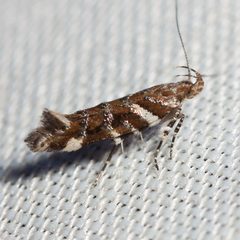
Aristotelia argentifera is a small in the Gelechiidae, commonly known as twirler moths. It was described by August Busck in 1903 and is known from California and western Nevada. The is notable for its distinctive wing pattern featuring metallic silvery and bluish iridescent . Larvae feed on Ericameria ericoides and Baccharis pilularis.

Pronunciation
How to pronounce Aristotelia argentifera: /ˌæɹɪstoʊˈtiːliə ˌɑːrdʒənˈtɪfərə/
These audio files are automatically generated. While they are not always 100% accurate, they are a good starting point.
Identification
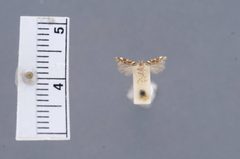
Distinguished from other Aristotelia by the specific arrangement of white fasciae and metallic silvery-bluish iridescent on the forewings. The combination of an oblique white fascia from the wing base, a middle costal white dash, and a larger white dash at the costal cilia—each continued by metallic scales—is diagnostic. The small size (10.5-11.5 mm wingspan) and western North American distribution further aid identification. Similar species in the may share general pattern elements but differ in the number, position, and extent of white markings and metallic scaling.
Images
Habitat
Associated with plants Ericameria ericoides and Baccharis pilularis, suggesting occurrence in coastal scrub, chaparral, and similar shrubland where these plants grow.
Distribution
Known from California and western Nevada in North America. Records indicate occurrence in the western United States, with specific documentation from these two states.
Diet
Larvae feed on Ericameria ericoides (coastal goldenbush) and Baccharis pilularis (coyote brush). feeding habits are not documented.
Host Associations
- Ericameria ericoides - larval food plantCoastal goldenbush, a shrub in the Asteraceae
- Baccharis pilularis - larval food plantCoyote brush, a shrub in the Asteraceae
Life Cycle
Complete with , larval, pupal, and stages. Larvae are specialized feeders on specific plants. Detailed timing and description of stages are not documented.
Ecological Role
Larval herbivore on specific Asteraceae shrubs. May contribute to nutrient cycling and serve as prey for and other natural enemies, though specific ecological interactions are not documented.
Similar Taxa
- Other Aristotelia speciesShare general body plan and wing pattern type but differ in specific arrangement of white markings and metallic ; many in are undescribed or difficult to distinguish without detailed examination
More Details
Taxonomic history
Described by August Busck in 1903 based on specimens from the western United States. The epithet 'argentifera' refers to the silver-bearing (metallic silvery) on the wings.
Genus context
Aristotelia is a large of small in the Gelechiidae . Many remain undescribed, and identification often requires examination of genitalia or detailed wing pattern analysis. The genus is known for larvae that specialize on particular plants across diverse plant families.