
Limnaecia
Stainton, 1851
Species Guides
1- Limnaecia phragmitella(Shy Cosmet Moth)
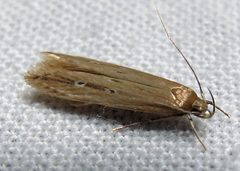
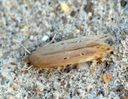
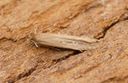
Limnaecia is a of micro- in the Cosmopterigidae. The genus includes the Shy Cosmet Moth (L. phragmitella), which has been the subject of the first high-quality assembly for the genus. in this genus are associated with wetland and have specialized larval associations with Typha plants.
Pronunciation
How to pronounce Limnaecia: /lɪmˈniːʃə/
These audio files are automatically generated. While they are not always 100% accurate, they are a good starting point.
Images
Habitat
Wetland areas where plants grow. The type L. phragmitella has been collected from wooded wetland .
Distribution
Recorded from Europe (including Denmark, Norway, Sweden, and the United Kingdom), North America (including Vermont, USA), and scattered locations in New Zealand, Russia, and Japan.
Diet
Larvae of L. phragmitella feed on Bulrush (Typha latifolia) and Lesser Bulrush (Typha angustifolia). Early instar larvae mine within leaf , later moving to seedheads.
Host Associations
- Typha latifolia - larval foodplant
- Typha angustifolia - larval foodplant
Life Cycle
Larvae develop as miners in leaf and seed of plants. Early instars mine within leaf sheaths; later instars move to seedheads. Larvae produce silk that prevents seed down from wind .
Behavior
Larvae are more readily detected than . Larval silk binds seed down, causing it to hang from seed rather than dispersing. This silk production is a distinctive behavioral trait.
More Details
Genomic resources
L. phragmitella represents the first high-quality assembly for the , with a -level scaffold containing 29 plus the Z , 98.5% BUSCO completeness, and estimated haploid genome size of 486.08 Mb.