
Holcocera immaculella
McDunnough, 1930
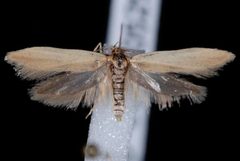
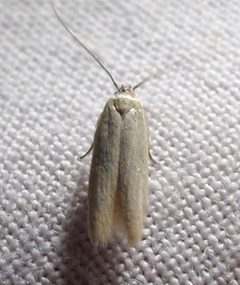
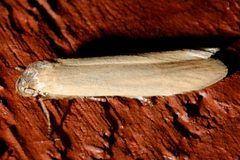
Holcocera immaculella is a small in the Blastobasidae, first described by McDunnough in 1930. The is notable for its specialized larval association with conifer seeds. It occurs across a broad geographic range in North America, from the southeastern United States through eastern Canada and west to British Columbia and Arizona. The species is currently treated as a synonym of Holcocerina immaculella in some taxonomic databases.
Pronunciation
How to pronounce Holcocera immaculella: //hɒlkoʊˈsɪərə ɪməˈkjulɛlə//
These audio files are automatically generated. While they are not always 100% accurate, they are a good starting point.
Images
Habitat
Associated with spruce-dominated forests and woodlands where trees occur.
Distribution
North America, including Ontario, Quebec, New Brunswick, Manitoba, British Columbia (Canada); Alabama, Arizona, Florida, Maine, Massachusetts, Minnesota, New York, Tennessee (United States).
Diet
Larvae feed on seeds of Picea (spruces).
Host Associations
- Picea - larval food plantseeds
Ecological Role
Seed ; larvae consume conifer seeds, potentially affecting spruce in localized areas.
More Details
Taxonomic Status
Listed as a synonym of Holcocerina immaculella in Catalogue of Life and GBIF, though retained as Holcocera immaculella in NCBI and other sources. The Holcocera versus Holcocerina distinction reflects ongoing taxonomic refinement within Blastobasidae.