
Deoclona yuccasella
Busck, 1903
Deoclona yuccasella is a small in the Autostichidae, described by August Busck in 1903. It is known from California in western North America. The has an intimate ecological relationship with Yucca whipplei, using the plant's dry seed pods for larval development and .
Pronunciation
How to pronounce Deoclona yuccasella: /deɪˈɒkləna jʌkəˈsɛlə/
These audio files are automatically generated. While they are not always 100% accurate, they are a good starting point.
Identification
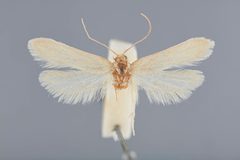
The combination of small size (16–20 mm wingspan), completely unmarked light reddish yellow forewings, and pale silvery yellow hindwings is distinctive. No similar Autostichidae in its California range are known to share this exact color pattern and complete lack of markings. Examination of genitalia may be necessary for definitive identification from congeneric .
Images
Appearance
A small with wingspan 16.2–20 mm. Forewings are unicolorous light reddish yellow, lacking any pattern or markings. Some individuals show slightly darker, more reddish coloration towards the apex compared to the basal half. Hindwings are pale silvery yellow. The overall appearance is plain and uniform without spots, bands, or other wing markings.
Habitat
Associated with Yucca whipplei stands; occurs in dry, open where this yucca grows, likely including chaparral, coastal sage scrub, and dry montane slopes in California.
Distribution
Recorded from California, North America. Specific localities within California are not detailed in available sources.
Diet
Larvae feed on Yucca whipplei. feeding habits are unknown.
Host Associations
- Yucca whipplei - larval plantLarvae develop within dry seed pods; occurs in holes eaten within the pods
Life Cycle
Larvae inhabit dry seed pods of Yucca whipplei. occurs within the seed pod in holes excavated by the larva. Specific details regarding placement, number of instars, and timing are unknown.
Behavior
Larvae are seed pod inhabitants, developing within the dry pods of their plant rather than in living tissue. The —excavating holes within the pod—suggests some degree of structural modification of the host structure.
Ecological Role
A consumer of Yucca whipplei seed pods. Likely functions as a seed , potentially reducing seed set of the plant. May serve as prey for or predators, though no specific records exist.
Human Relevance
No known economic importance. Not a pest of cultivated plants. Of potential interest to lepidopterists studying yucca-associated .
Similar Taxa
- Other Deoclona speciesCongeneric may share similar size and plain wing appearance; genitalia examination typically required for separation
- Other AutostichidaeMany small Autostichidae have plain coloration, but specific combination of unmarked reddish yellow forewings and silvery yellow hindwings appears distinctive for this
More Details
Taxonomic history
Described by August Busck in 1903, a prominent early American lepidopterist who described numerous North American microlepidoptera. The epithet 'yuccasella' directly references its association with Yucca.
Conservation status
No formal conservation assessment exists. Dependence on Yucca whipplei suggests vulnerability to loss affecting plant , but no specific threats have been documented.