
Epermenia imperialella
Busck, 1906
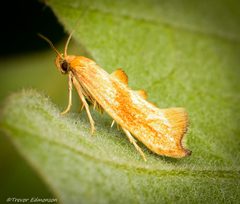
Epermenia imperialella is a small in the Epermeniidae, described by August Busck in 1906. It is recorded from scattered localities in central and eastern North America. have distinctive yellow forewings with reddish ochreous and greyish patterning. The larval relationship remains uncertain, though Apiaceae has been suggested as a probable food source.
Pronunciation
How to pronounce Epermenia imperialella: //ɛ.pɛrˈmɛ.ni.ə ɪmˌpɪə.riˈæl.lə//
These audio files are automatically generated. While they are not always 100% accurate, they are a good starting point.
Identification
The combination of small size (13–18 mm wingspan), light yellow forewings with reddish ochreous costal and areas, and the distinctive broad oblique greyish-ochreous fascia with associated tuft distinguishes this from other Epermenia. The dark bronzy fuscous hindwings contrast with the lighter forewings. Within its North American range, comparison with other Epermeniidae would require examination of genitalia or molecular data for definitive identification.
Images
Appearance
A small with wingspan 13–18 mm. Forewings light yellow, overlaid with reddish ochreous on the costal and areas. A broad, ill-defined oblique darker greyish-ochreous fascia crosses the middle of the wing, widest at the costal edge and narrowing to the edge at the basal third, where it continues into a dark ochreous dorsal tuft. Reddish coloration intensifies toward the apex. Hindwings dark bronzy fuscous.
Distribution
Recorded from Manitoba and Alberta in Canada, and Iowa and Pennsylvania in the United States. Distribution records are sparse, suggesting either genuinely restricted range or undercollection.
Diet
Larvae probably feed on Apiaceae , though this remains unconfirmed.
More Details
Taxonomic history
Described by August Busck in 1906. The epithet 'imperialella' likely references the imperial or regal appearance of the reddish-yellow coloration.
Data gaps
Critical information including larval plants, , and complete geographic range remains unknown. The suggestion of Apiaceae as larval food is speculative and requires verification through rearing or field observation.