
Albuna pyramidalis
(Walker, 1856)
Fireweed Clearwing Moth
Albuna pyramidalis, commonly known as the fireweed clearwing moth, is a sesiid native to North America. It belongs to the clearwing moth Sesiidae, whose members are known for -mimicking appearance and activity. The species is associated with fireweed (Chamerion angustifolium) as a larval plant. It is assigned Hodges number 2533 in the North American moth numbering system.
Pronunciation
How to pronounce Albuna pyramidalis: /ælˈbuːnə pɪˌræmɪˈdælɪs/
These audio files are automatically generated. While they are not always 100% accurate, they are a good starting point.
Identification
Distinguished from other clearwing moths by combination of geographic range, plant association, and specific wing venation and body patterning. Similar in Albuna and related sesiids may require examination of genitalia or detailed wing pattern for definitive identification. The association with fireweed provides a clue.
Images
Appearance
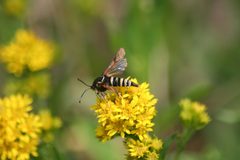
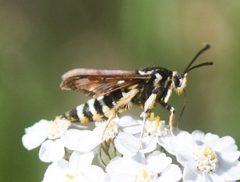
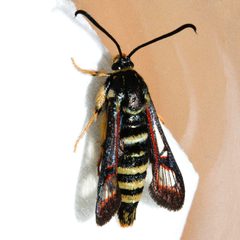
exhibit clearwing moth with transparent wings due to reduced scaling, dark veining, and often yellow or orange body coloration with dark banding. The wingspan is moderate for the . Like other Sesiidae, the body is slender and -like, with possible metallic coloration.
Habitat
Associated with supporting larval plant fireweed (Chamerion angustifolium), including recently disturbed areas, burned sites, clearings, and open woodlands. Found in and montane regions where fireweed is abundant.
Distribution
Nearctic distribution, recorded from Canadian provinces of Alberta, Manitoba, and Saskatchewan. Range extends across northern and western North America where fireweed occurs.
Seasonality
active during daylight hours in summer months, coinciding with fireweed flowering period. Exact period varies with latitude and local climate.
Diet
Larvae feed internally on roots and stems of fireweed (Chamerion angustifolium). feeding habits not well documented; likely nectar from flowers including fireweed.
Host Associations
- Chamerion angustifolium - larval Primary ; larvae bore in roots and lower stems
Life Cycle
Complete with , larva, pupa, and stages. Larvae are borers in plant roots and stems. occurs in silk cocoon in soil or plant debris. Adults emerge in summer.
Behavior
activity with -mimicking . are known to visit flowers for nectar. Larval boring in plant stems and roots.
Ecological Role
Larval herbivore on fireweed, contributing to of this early successional plant . pollination of flowers while nectar feeding. Serves as prey for insectivorous birds and other .
Human Relevance
Minor significance as of fireweed, which is valued for honey production and as an ornamental. No major economic impact documented.
Similar Taxa
- Other Albuna speciesSimilar clearwing and -like appearance; require detailed examination for separation
- Sesiidae family membersShared transparent wings and habits; plant specificity aids identification
More Details
Etymology
Specific epithet 'pyramidalis' likely refers to the pyramidal shape of fireweed inflorescences or the 's association with this plant.
Taxonomic history
Originally described as Aegeria pyramidalis by Walker in 1856, later transferred to Albuna.