
Acossus centerensis
Lintner, 1877
poplar carpenterworm, Poplar Carpenterworm Moth
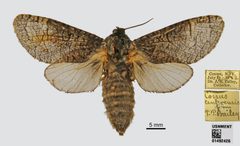
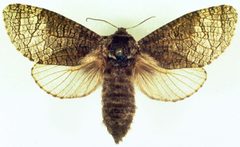
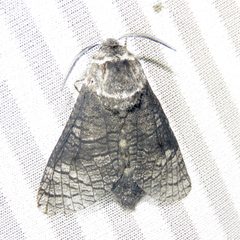
Acossus centerensis is a carpenter- in the Cossidae, commonly known as the poplar carpenterworm. It is distributed across northern North America, from New Jersey west to Illinois and North Dakota in the United States, and from Quebec and Ontario west to British Columbia in Canada. The exhibits in size, with females notably larger than males. Larvae are specialized wood-borers that feed on Populus species, particularly trembling aspen.
Pronunciation
How to pronounce Acossus centerensis: /əˈkɒsəs sɛntəˈrɛnsɪs/
These audio files are automatically generated. While they are not always 100% accurate, they are a good starting point.
Identification
Males have a wingspan of 40–50 mm; females are larger at 50–64 mm. The is distinguished from its sister species Acossus boreocryptus by , mtDNA barcode, and seasonal ; A. centerensis males are , whereas A. boreocryptus males exhibit .
Images
Habitat
Associated with Populus stands, particularly trembling aspen (Populus tremuloides) and balsam poplars.
Distribution
North America: United States (New Jersey west to Illinois and North Dakota); Canada (Quebec and Ontario west to British Columbia, including Alberta, Manitoba, and Saskatchewan).
Diet
Larvae feed on Populus , primarily Populus tremuloides (trembling aspen), and also balsam poplars.
Host Associations
- Populus tremuloides - larval plantprimary
- balsam poplars - larval plantsecondary
Behavior
Males are ; attracted to synthetic lures baited with (E,E) 3,5-tetradecadienyl acetate (EE-TDDA).
Ecological Role
Wood-boring larvae tunnel in living or dead Populus stems and trunks, contributing to nutrient cycling and creating for other organisms.
Human Relevance
Larvae may weaken or damage poplar trees through wood-boring activity; of potential concern in managed poplar stands.
Similar Taxa
- Acossus boreocryptusSister distinguished by , mtDNA barcode, male (vs. in A. centerensis), and seasonal ; also smaller in size.